
Fall Lawn Care: The Amherst Homeowner’s Seeding Guide
As the humid heat of a late summer day begins to fade and the evenings in Amherst offer a crisp, refreshing breeze, many homeowners find themselves looking out at their lawns with a mixture of hope and resignation. After months of foot traffic, sun exposure, and potentially erratic late-season rain, your turf is likely showing signs of fatigue.
If you want a vibrant, lush, and resilient lawn come next spring, the work doesn’t start when the flowers bloom—it starts now. Autumn is, without question, the most critical time for lawn maintenance in our region. This is the golden window for fall lawn care, specifically when it comes to overseeding and soil preparation.
At Amherst Landscaping, we have spent years helping neighbors cultivate healthy, thick green spaces that withstand the unique climate challenges of our area. In this guide, we’ll walk you through the essential steps to ensure your property remains the envy of the street.
Frequently Asked Questions
Why is autumn better than spring for seeding?
Fall provides consistent soil temperatures and fewer weeds, allowing grass to focus on deep root development before the winter dormancy.
Is fall lawn care enough to fix a brown lawn?
While fall is the most impactful time, severe issues like drainage or soil diseases should be assessed by a professional to ensure your seeding investment takes hold.
Why Fall is the Best Time for Lawn Seeding
Many homeowners mistakenly believe that spring is the optimal time to sow grass seed. While nature makes everything “wake up” in the spring, it is actually a challenging time for new grass to take root. Spring brings competition from weeds, warming temperatures that stress young seedlings, and unpredictable moisture levels.
Fall lawn care wins for three primary reasons:
- Ideal Soil Temperatures: As the ambient air temperature cools, the soil retains the summer’s warmth for several weeks. This provides the perfect “incubator” for cool-season grass seeds to germinate quickly and consistently.
- Reduced Weed Competition: Many common turf weeds, like crabgrass, are reaching the end of their life cycle by early autumn. New grass seeds won’t have to fight for nutrients or sunlight against aggressive invasive species.
- Maximum Root Development: Fall offers a long period of cool, moist weather before the ground freezes. This allows young grass plants to develop deep, robust root systems, which are essential for surviving the following summer’s heat.
Frequently Asked Questions
What if it rains too much after I seed?
Light rain is beneficial, but heavy washout can displace seeds. If heavy rain is forecasted, it is best to delay your seeding by a few days.
How late into the fall can I seed?
In the Amherst region, aim to finish seeding at least 4-6 weeks before the first hard frost to ensure seedlings are established.
Step-by-Step: The Amherst Seeding Strategy
Achieving a professional-looking lawn isn’t just about throwing a bag of seed across the yard. It requires a systematic approach to soil health and seed-to-soil contact.
1. Assessment and Preparation
Before you buy a single bag of seed, walk your lawn. Look for bare patches, thin areas, or parts of the yard that have suffered from heavy traffic. If you have significant moss buildup or deep compaction, you may need to address underlying soil drainage issues first.
2. Dethatching and Aeration
If your lawn feels spongy or has a thick layer of brown debris between the grass blades and the soil surface (thatch), you need to remove it. Core aeration is the single most effective way to improve the health of an Amherst lawn. By pulling small plugs of soil out of the ground, aeration allows air, water, and nutrients to penetrate deep into the root zone while providing the perfect “pockets” for new seeds to settle into.
3. Choosing the Right Seed
Not all grass seed is created equal. Using a generic “big box store” blend can lead to patchy results if the varieties aren’t suited to our specific soil pH and light conditions. For most Amherst residential properties, a high-quality blend of Kentucky Bluegrass, Perennial Ryegrass, and Fine Fescue is recommended.
4. Overseeding and Fertilization
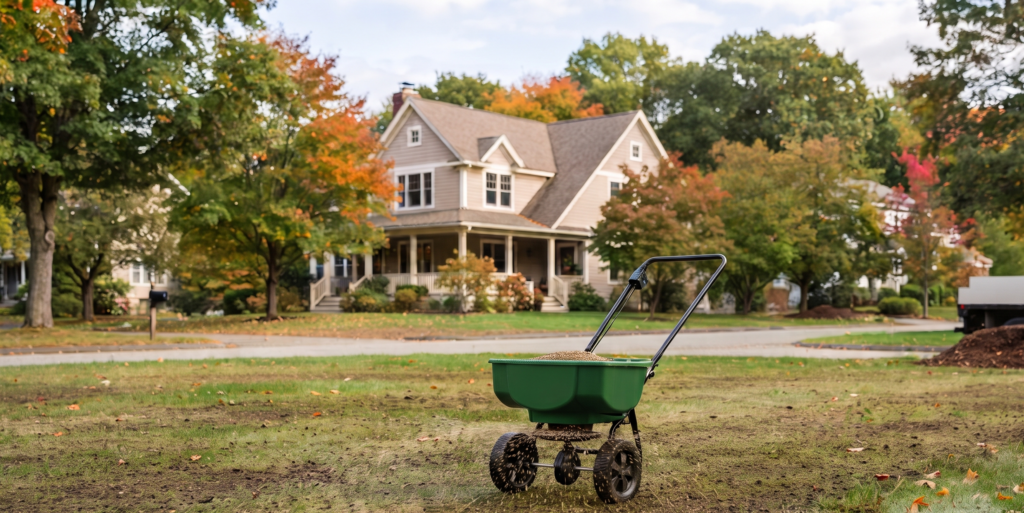
Once you have aerated, it is time to spread your seed. Use a broadcast spreader for even distribution. Immediately follow this with a “starter fertilizer.” Unlike standard nitrogen-heavy fertilizers, a starter fertilizer is rich in phosphorus, which is essential for healthy root development.
5. The Critical Watering Phase
This is where many homeowners fall short. Once the seed is down, it must remain consistently moist—not soaked, but damp—for the first 14 to 21 days. If the seeds dry out during the germination process, they will die. A light, daily misting is far more effective than a deep, weekly soaking.
Frequently Asked Questions
Do I have to aerate every year?
While not mandatory, annual aeration is highly recommended for Amherst’s soil types to prevent compaction.
What is the “starter fertilizer” difference?
Starter fertilizers have higher phosphorus levels, which are specifically formulated to support root growth rather than just top-blade “greening.”
Trusting the Experts at Amherst Landscaping
When you are managing your property, experience matters. Amherst Landscaping is rooted in this community. We understand that local soil composition requires specific amendments to thrive.
We don’t just follow “textbook” lawn care; we follow the science of our local ecosystem. By prioritizing sustainable practices, we ensure that your lawn care plan isn’t just effective for this year but also builds the soil health for the next decade. Our team utilizes advanced equipment to ensure that aeration and seeding are performed at the optimal depth, maximizing your return on investment.
Frequently Asked Questions
Why choose Amherst Landscaping over doing it myself?
We use commercial-grade equipment and regionally adapted seed blends that aren’t available in retail stores, leading to higher germination rates.
Do you offer soil testing?
Yes, we analyze your soil pH to determine if amendments like lime are needed to help your new grass thrive.
Serving Amherst Homeowners
If you are searching for lawn care services near me in Amherst, look no further. Whether you are in the heart of the community or in the surrounding residential neighborhoods, Amherst Landscaping provides the professional, localized expertise required to keep your turf lush and healthy. We don’t just provide services; we provide solutions tailored to our local soil and climate. Contact our team today for a free consultation and let us help you grow a lawn you’re proud of.
Preparing for Long-Term Success
Your lawn is a living asset. By investing in fall lawn care, you are not just improving your home’s curb appeal; you are enhancing your outdoor living space and increasing your property value.
At Amherst Landscaping, we pride ourselves on being your partners in property maintenance. Whether you are looking for a one-time consultation on your seeding strategy or a full-service seasonal lawn care program, we have the local expertise to deliver results.
Don’t let another season pass with a thin or patchy lawn. The ideal window for seeding in Amherst is closing, and the best time to act is today.
Are you ready to transform your lawn into the lush, healthy green space your home deserves? Contact Amherst Landscaping today to schedule your autumn lawn evaluation and let our team handle the heavy lifting.
Frequently Asked Questions
Should I stop mowing before winter?
No, continue to mow at a regular height until the grass stops growing, but avoid cutting it too short, as longer grass blades help insulate the roots.
When can I use a weed-and-feed on my new lawn?
Wait until the new grass has been mowed at least four times before applying any herbicides to ensure the seedlings are mature enough to handle it.
Our Local Service Area
Amherst Landscaping: Serving the entire Amherst community and surrounding areas
More from the blog

Snow Removal Equipment & Tools: Complete Buyer’s Guide
If you've ever watched a plow truck fly past your commercial lot at 5 AM and wondered what it actually takes to…
Read Article
Lawn Mowing Services in Buffalo NY for a Healthy, Beautiful Lawn
A healthy, well-maintained lawn can transform the appearance of your property, improve curb appeal, and create a more enjoyable outdoor space. For…
Read Article
Snow Removal in Buffalo, NY: Your Complete Local Guide
If you've lived here more than one winter, you already know: Buffalo doesn't do "light dusting." We do lake-effect walls of snow…
Read Article