Outdoor Living: Adding Fire Pits and Walkways
There is something deeply satisfying about watching a New England summer evening transition into a crisp autumn night right from your own backyard. As homeowners look to maximize their properties, outdoor living has evolved from a luxury trend into an essential extension of the home. Investing in professionally designed fire pits and walkways is one of the most effective ways to elevate both the day-to-day enjoyment and the long-term value of your property. By thoughtfully integrating these hardscape features, you transform underutilized grass into dynamic, functional zones perfect for entertaining, relaxing, and connecting with family.
Frequently Asked Question
Q: How do fire pits and walkways add value to my home? A: They expand your usable living square footage outdoors. Professionally installed hardscapes provide an attractive, functional area that increases curb appeal and returns high resale ROI by appealing directly to buyers looking for turnkey outdoor entertainment spaces.
The Hardscape Blueprint: Why Structure Matters First
When thinking about outdoor living, adding fire pits and walkways, it is easy to focus purely on the aesthetics. However, successful landscaping relies on spatial flow and structural integrity. A stray fire pit dropped into the middle of a lawn feels disconnected, while an unpaved path quickly turns into a muddy trail during early spring thaws.
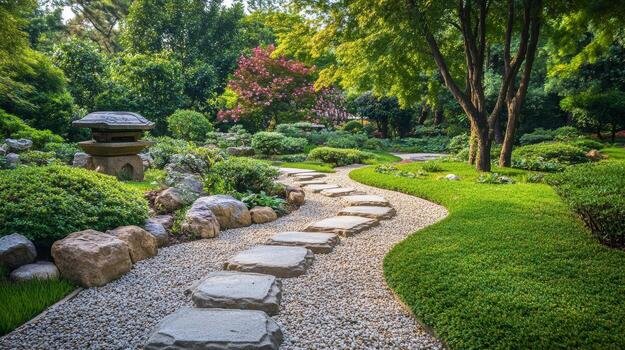
Hardscaping provides the anchor. Walkways act as the visual and physical circulation veins of your yard, guiding foot traffic away from sensitive turf and creating logical transitions between your back door, garden beds, and entertainment hubs. When those paths culminate in a custom fire pit area, you create a dedicated destination—a focal point that draws people outward.
Frequently Asked Questions
Q: Should I install the walkway or the fire pit first? A: It is best to design and install them as a unified project. However, the foundational excavation and grading for the main patio/fire pit zone usually occur first, with the walkways graded simultaneously to ensure seamless, flush connections.
Q: How wide should a residential landscape walkway be? A: A standard primary walkway should be 3 to 4 feet wide. This allows two people to walk side-by-side comfortably or comfortably pass one another without stepping onto the grass.
Designing the Perfect Walkway: Materials and Safety
A walkway should never be an afterthought. It sets the tone for your entire landscape design, establishing whether your property feels formal and clean or rustic and organic.
Choosing Your Hardscape Materials
The material you select dictates both the look and the maintenance requirements of your path:
- Interlocking Concrete Pavers: Highly durable and versatile. Pavers come in vast arrays of textures and colors, mimicking natural stone while offering superior resistance to shifting caused by freeze-thaw cycles.
- Natural Flagstone or Bluestone: Ideal for a classic, timeless northeastern aesthetic. These stones can be laid tightly for a seamless finish or set with wide gaps filled with polymeric sand or ground cover.
- Granite Cobblestones: Excellent for bordering paths or building high-traffic steps, delivering an elegant, historic texture that lasts generations.
Engineering for Longevity
A beautiful path is only as good as its foundation. True hardscaping expertise shows up in what you cannot see. Proper installation requires excavating down past the topsoil, laying a tightly compacted gravel base layer, adding a bedding sand layer, and utilizing robust edge restraints. Without this subterranean engineering, heavy rain and shifting winter ground will cause stones to sag, crack, and create tripping hazards.
Frequently Asked Questions
Q: What is the most durable material for a walkway in a cold climate? A: Interlocking concrete pavers and high-quality natural stones like granite or bluestone are exceptionally durable. Interlocking pavers are engineered to flex slightly with ground movements, preventing the structural cracking common in poured concrete.
Q: How do you keep weeds from growing between walkway stones? A: We use high-performance polymeric sand in the joints. When swept in and activated with water, it hardens to lock the stones together and forms a durable barrier that resists weed growth and ant hills.
Fire Pits: Crafting the Ultimate Gathering Spot
Once your paths are established, the next step in elevating your outdoor living experience is selecting and positioning your fire feature. Fire naturally gathers people, acting as a social anchor long after the sun goes down.
Wood-Burning vs. Gas Fire Features
Deciding on your fuel source dictates the construction process and the overall vibe of your space:
| Feature | Wood-Burning Fire Pits | Gas / Propane Fire Features |
| The Experience | Authentic crackle, natural smoke, high heat output, classic campfire feel. | Instant on/off control, smoke-free, adjustable flame height, clean modern look. |
| Installation | Simpler upfront build; requires dedicated firewood storage and clearing of embers. | Requires running underground gas lines or creating hidden access panels for propane tanks. |
| Safety Factors | High spark potential; requires greater clearance from structures and overhanging trees. | Low risk; safe for use closer to covered patios or structural seating when permitted by local code. |
Smart Placement and Clearances
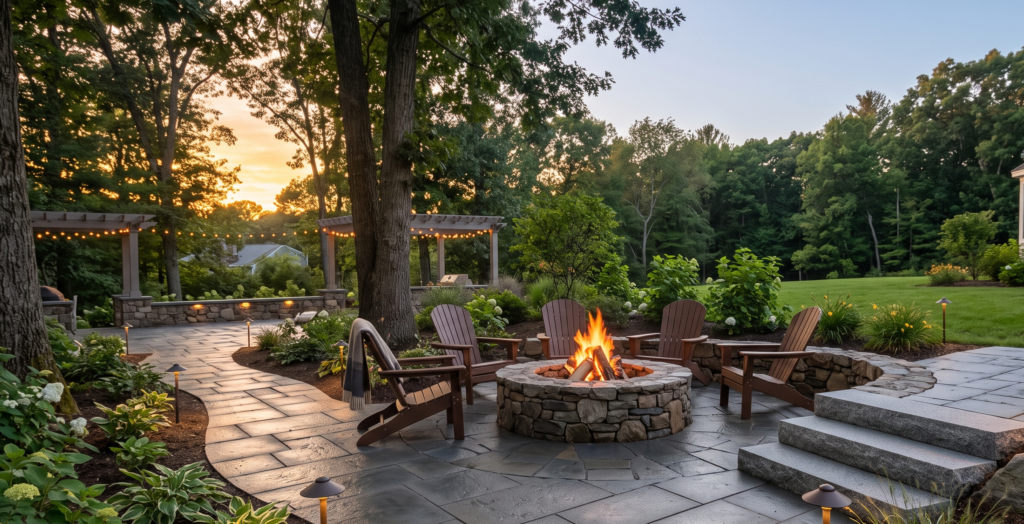
Safety dictates design when dealing with fire. A custom stonework fire pit should sit at least 10 to 15 feet away from your main house, wood decks, property lines, and low-hanging tree canopies. Additionally, the surrounding patio space needs to be wide enough to accommodate heavy Adirondack chairs or built-in stone seating walls while still leaving a safe corridor for people to walk past without getting too close to the heat.
Frequently Asked Questions
Q: How much space do I need around a fire pit for seating? A: You should plan for a minimum radius of 5 to 7 feet extending outward from the edge of the fire pit. This accommodates standard patio chairs and leaves enough room for guests to pull back safely from the heat.
Q: Can you put a fire pit directly on top of an existing concrete deck? A: Wood-burning fire pits should never be placed directly on wood or composite decks due to spark risks. A stone or brick gas-powered fire pit can safely sit on stone patios or concrete foundations with proper insulation barriers.
The Local Edge: Designing for the Pioneer Valley
Landscaping is inherently local. What works flawlessly in a dry Southwestern climate will quickly fail under the weight of a New England winter. For properties in Amherst, Northampton, and across Hampshire County, Massachusetts, local environmental factors must guide your hardscape installation.
Our region deals with heavy clay soils, intense spring rains, and severe frost heaves. When water trapped in clay soils freezes, it expands with immense force. If your contractor does not excavate deep enough or fail to establish proper pitched drainage systems, and your beautiful new walkway will buckle and warp within two seasons.
Furthermore, hardscaping projects must respect municipal regulations. Depending on your proximity to local conservation zones, wetlands, or historical districts, your project may require specific permitting. Working with a team rooted in Western Massachusetts ensures your project is built to withstand local freeze-thaw cycles while remaining fully compliant with town building codes.
Frequently Asked Questions
Q: How deep do you need to dig for a patio or walkway base in Massachusetts? A: For residential walkways and patios, we typically excavate down 6 to 8 inches to account for a robust 4-to-6-inch compacted gravel sub-base and sand bedding layer, which safely buffers the stones against regional frost heaving.
Q: Do I need a town permit to build a fire pit patio in Amherst? A: It depends on the size of the hardscape footprint and your proximity to local wetlands or conservation buffers. We review local zoning maps and handle necessary municipal compliance filings for your property.
Finding Trusted Hardscaping Contractors Near Me
When searching for reliable hardscaping contractors near me or trying to find a qualified fire pit builder near me, proximity and localized expertise matter more than anything. Working with a local hardscape specialist ensures that your crew knows exactly how the regional soil behaves, holds the correct Massachusetts home improvement contractor (HIC) licenses, and can easily coordinate local municipal site inspections.
Choosing a contractor right in your neighborhood also ensures long-term accountability. Whether you need your polymeric sand refreshed down the road or want to extend your walkway into a larger patio system next season, having a trusted professional right around the corner makes all the difference.
Frequently Asked Question
Q: How can I find the best stone masonry and patio installation near me? A: Look for contractors with a strong local portfolio in the Pioneer Valley, verified Google Business reviews from your specific town, and teams that offer comprehensive warranties against winter frost shifting.
Maximizing ROI and Home Value
Beyond the immediate lifestyle benefits, updating your property with professional hardscaping delivers a powerful return on investment (ROI). According to real estate market metrics, well-executed outdoor living spaces rank among the top features sought after by modern homebuyers.
A manicured lawn is nice, but a turnkey, expertly paved stone patio paired with a built-in fire feature represents an entirely extra “room” for the house. It expands the usable square footage of the property without the massive disruption and cost of an interior structural addition. It creates an instant emotional connection during home showings, directly translating into higher market valuation and curb appeal.
Frequently Asked Questions
Q: How much maintenance does a custom stone patio require? A: Very little compared to wood features. An annual power wash, occasional clearing of organic debris, and refreshing the polymeric sand every few years is all it takes to keep it looking pristine.
The Professional Hardscape Checklist
Before breaking ground on your backyard transformation, ensure your project plan addresses these vital phases:
- Utility Verification: Always call 811 to locate underground power, water, or gas lines before any excavation begins.
- Sub-Base Compaction: Ensure a minimum of 4–6 inches of crushed gravel base is mechanically compacted to prevent future settling.
- Pitch and Drainage: Walkways and patios must slope slightly away from your home’s foundation (at least 1/4 inch per linear foot) to prevent water pooling.
- Polymeric Sand Finishing: Fill paver joints with high-quality polymeric sand to lock the stones together and inhibit weed growth.
Transform Your Property with Amherst Landscaping
Creating an outdoor oasis that seamlessly blends beauty, structural integrity, and local compliance requires seasoned execution. At Amherst Landscaping, we bring years of direct, hands-on experience transforming Western Massachusetts yards into breathtaking functional art.
From analysing your soil’s drainage profile to laying down precision masonry that survives our toughest winters, our team handles every detail with craftsmanship and care. Let us help you map out the perfect flow of paths and warmth for your home. Reach out to Amherst Landscaping today to schedule an on-site design consultation and bring your outdoor living vision to life.
Find Us Locally
Service Areas: Amherst, Northampton, Hadley, South Hadley, Pelham, and the surrounding Pioneer Valley.
Frequently Asked Questions
Q: How long does a typical walkway and fire pit project take to install? A: Most residential installations take between 3 to 7 business days, depending on the site access, layout complexity, material selections, and weather conditions.
More from the blog

Snow Removal Equipment & Tools: Complete Buyer’s Guide
If you've ever watched a plow truck fly past your commercial lot at 5 AM and wondered what it actually takes to…
Read Article
Lawn Mowing Services in Buffalo NY for a Healthy, Beautiful Lawn
A healthy, well-maintained lawn can transform the appearance of your property, improve curb appeal, and create a more enjoyable outdoor space. For…
Read Article
Snow Removal in Buffalo, NY: Your Complete Local Guide
If you've lived here more than one winter, you already know: Buffalo doesn't do "light dusting." We do lake-effect walls of snow…
Read Article