Choosing the Right Mulch for Amherst Garden Beds
When spring arrives in Western New York, property owners across Erie County begin looking at their beds, thinking about how to refresh their soil, suppress weeds, and boost curb appeal. At Amherst Landscaping, we see it every season: a homeowner heads to the local supply yard, grabs whatever dark bark or wood chips are on sale, and spreads it thick across every inch of their yard. But the truth is, the soil conditions near Snyder and Eggertsville are entirely different from a sun-drenched perennial garden out in East Amherst or near Williamsville. Choosing the right material for your planting beds requires balancing local Lake Erie microclimates, plant root systems, heavy soil chemistry, and long-term organic decomposition.
Understanding Western New York Soils and Climate Needs
Before comparing materials, it helps to look at what lies right underneath your boots. Soils across Amherst, NY, range dramatically—from heavy, wet clay near the Ellicott Creek floodplain to silty, alkaline loam tucked along the Niagara Escarpment corridor.
Our harsh Western New York winters subject plant root systems to intense freeze-thaw cycles driven by Lake Erie weather patterns. This rapid temperature fluctuation frequently pushes shallow perennials right out of the ground (heaving). In mid-summer, heat waves bake uncovered topsoil, drying out dense clay and depleting microbial activity within days.
+————————–+————————————–+————————————+
| Local Soil/Site Condition | Main Challenge | Preferred Mulch Strategy |
+————————–+————————————–+————————————+
| Heavy Erie County Clay | Poor drainage, root rot potential | Fine Wood Chips or Light Leaf Mold |
| Alkaline Loam (Escarpment)| Elevated pH levels | Pine Bark Shreds or Pine Needles |
| Exposed WNY Hillside Beds | Washout & Soil Heaving | Triple-Shredded Dark Hardwood |
| Established Acid-Lovers | Suboptimal Soil pH | Hemlock or Aged Pine Bark |
+————————–+————————————–+————————————+
The right ground cover acts as a thermal blanket during frost spikes, retains soil moisture during hot July dry spells, and continuously donates organic matter back to beneficial mycorrhizal fungi as it breaks down.
Frequently Asked Questions
Q: How do Western New York winter frost heaves affect garden beds in Amherst, NY?
A: During WNY winter freeze-thaw cycles, moisture in heavy local clay expands and contracts, which can sever roots and physically lift shallow perennials out of the topsoil. A 2- to 3-inch protective organic layer insulates the ground, maintaining steady soil temperatures and preventing extreme thermal shifting.
Q: Why do soil conditions vary so drastically across Erie County?
A: Local glacial geology plays a massive role. Low-lying areas near Ellicott Creek feature dense, moisture-retentive clay deposits, while neighborhoods near Williamsville and Clarence feature limestone-rich, higher-pH soils. Each environment requires a tailored organic top dressing to balance moisture and root health.
Comparing Organic Mulch Options for Local Gardens
Not all organic products perform the same way. Depending on your primary focus—whether it is vegetable yields, foundation plantings, or specimen trees—here is how the top materials stack up:
1. Hemlock Bark
Hemlock remains a favorite across Western New York for good reason. It features a natural, rich reddish-brown hue that does not rely on synthetic chemical dyes.
- Best used for: formal front-yard foundation beds, ornamental tree rings, and acid-loving shrubs like rhododendrons, mountain laurels, and azaleas.
- Pro Tip: Hemlock contains high levels of natural tannins, which deter common garden pests while breaking down into a nutrient-dense humus over 12–18 months.
2. Triple-Shredded Dark Hardwood
If you are dealing with sloped beds or open, windy properties near Transit Road corridors, fine triple-shredded hardwood is your best bet. Because the fibers are shredded multiple times, they interlock like Velcro®, keeping the material firmly in place during heavy rainstorms.
- Best used for: Sloped landscape beds, high-traffic commercial borders, and heavy perennial gardens.
- Caution: Avoid piling hardwood directly against tree trunks. High-density wood shreds piled into “mulch volcanoes” hold excess moisture against the bark, attracting wood-boring insects and root-rot pathogens.
3. Aged Pine Bark Shreds & Needles (Pine Straw)
Pine bark is naturally acidic and exceptionally slow to decompose compared to hardwood. For gardens packed with blueberries, hydrangeas, or native evergreen ferns, pine-based organic top dressings maintain the soil acidity these species crave.
- Best used for: Dedicated acid-loving garden zones and shade-tolerant native plantings.
4. Leaf Mold & Screened Compost
For vegetable gardens, raised beds, and delicate flower borders, wood-based mulches can sometimes temporarily rob the top layer of soil of nitrogen as soil bacteria work to break down the carbon-rich wood. Screened leaf compost solves this issue entirely.
- Best used for: Annual beds, kitchen gardens, and delicate perennial borders.
- Benefits: Feeds earthworms instantly, improves soil structure, and regulates soil temperature without locking up nitrogen.
Frequently Asked Questions
Q: What is the main benefit of choosing natural hemlock over dyed dark hardwood?
A: Natural hemlock gets its color and pest resistance from organic tannins rather than artificial dyes. As it decomposes, it enriches the soil with clean organic matter without leaching synthetic pigments into sensitive root zones.
Q: Will high-carbon wood chips drain nitrogen out of my garden soil?
A: Only at the very surface where wood meets soil. While soil microbes consume surface nitrogen to break down carbon-heavy wood chips, plant roots positioned deeper in the topsoil remain unaffected. For delicate vegetable or annual flower beds, switching to screened leaf compost avoids surface nitrogen tie-ups entirely.
Proper Application Technique: The 3-Inch Rule
Even the highest quality material will cause issues if applied incorrectly. Every year, our crew addresses healthy trees and shrubs suffering from over-application or improper installation across Erie County.
Keep all wood products 2 to 3 inches away from the base of trunks and woody stems. Plant roots need oxygen exchanges; burying root flares under dense mounds smothers the root system over time.
Step-by-Step Installation Guide
1. Clear and Edge the Beds: Step 1.
Remove existing weeds by the roots. Cut a crisp, 3- to 4-inch deep vertical edge around the perimeter of the lawn to create a clean boundary that holds top dressing inside the bed.
2. Cultivate and Hydrate the Topsoil: Step 2.
Lightly loosen compacted topsoil with a hand cultivator and water the bed thoroughly. Applying dry material over bone-dry soil creates a hydrophobic layer that sheds light rain.
3. Measure and Spread Evenly: Step 3.
Spread a uniform layer 2 to 3 inches deep. If refreshing an existing bed that already has decomposed material, apply only 1 to 2 inches to top off the layer.
4. Pull Back from Root Flares: Step 4.
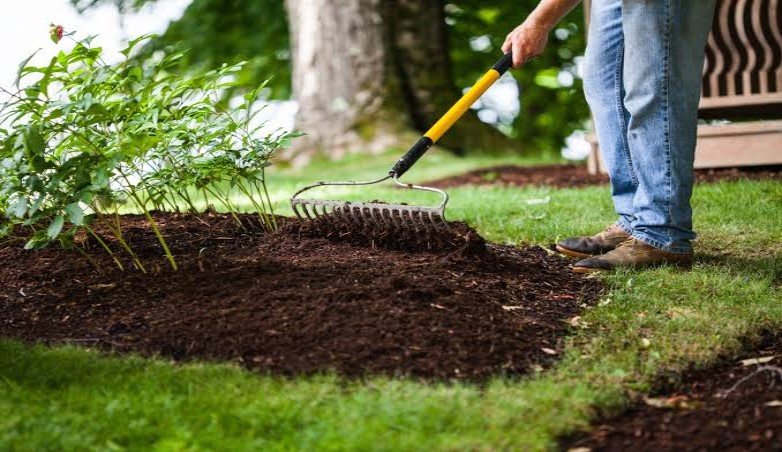
Use a hand rake or your hands to gently pull material away from plant bases, tree trunks, and wooden structure siding to avoid moisture traps and pest migration.
Frequently Asked Questions
Q: What is a “mulch volcano,” and why is it harmful to trees?
A: A mulch volcano occurs when material is piled tightly against a tree trunk in a steep cone. This traps excess moisture against the bark, causing fungal rot, encouraging root-girdling, and creating safe havens for wood-boring insects and rodents.
Q: How deep should mulch be applied in existing landscape beds?
A: For newly dug or bare garden beds, maintain a 2- to 3-inch depth. For established beds with an existing layer from previous seasons, apply only 1 to 2 inches to refresh the top color without suffocating plant roots underneath.
Seasonal Care and Longevity Tips
To get the most out of your landscape beds across the year, follow this simple maintenance cadence:
- Late Spring: Inspect beds after the last frost. Rake through existing layers to break up fungal mats (such as artillery fungus or slime mold) and allow air back into the soil.
- Mid-Summer: Check moisture levels under the top layer before running irrigation systems. A 3-inch layer can reduce water loss from evaporation by up to 50%, saving you money on your water bill.
- Late Fall: Leave fallen leaves inside deeper, out-of-sight shrub borders where possible, or top beds with a light layer of leaf compost to protect shallow-rooted plants through Western New York’s winter freezes.
Frequently Asked Questions
Q: How do I prevent nuisance fungi like artillery fungus or slime mold in my garden beds?
A: Fungal growth flourishes in stagnant, damp wood layers. Periodically agitating or raking the top inch of your beds during late spring breaks up crusty surface mats, exposes spores to sunlight, and restores airflow to the soil.
Q: How much irrigation water can a proper mulch layer save during hot Western New York summers?
A: A well-maintained 3-inch blanket shades the soil from direct sunlight, reducing surface evaporation by 40% to 50%. This drastically reduces the frequency of manual watering required during peak July and August dry spells.
Local Landscape Services Near Me: Serving Amherst, NY & Surrounding WNY Neighborhoods
When searching for “reliable mulching services near me” or “local garden bed maintenance in Amherst, NY,” you need a local team that understands Erie County soil profiles, microclimates, and indigenous plant species. Amherst Landscaping provides full-service spring bed preparation, organic mulch delivery, precision edging, and seasonal cleanup across:
- Amherst, NY: Click to open side panel for more information (14221, 14226, 14228, 14051, 14068) — Snyder, Eggertsville, East Amherst, Getzville, North French corridor
- Williamsville, NY (14221) — Village Center & Main Street residential areas
- Clarence, NY (14031) — Main Street & Sheridan Drive borders
- Tonawanda, NY (14150) — Colvin & Niagara Falls Blvd corridors
Frequently Asked Questions
Q: Where can I find professional mulch delivery and spreading near me in Amherst, NY?
A: Amherst Landscaping provides complete end-to-end yard maintenance for properties throughout Amherst, NY Click to open the side panel for more information and Western New York, including organic weed clearing, perimeter trenching, and uniform spreading.
Q: Do you offer bulk organic mulch delivery near my location in Erie County?
A: Yes, we deliver premium hemlock, triple-shredded dark hardwood, and aged pine bark directly to residential and commercial properties within a 15-mile radius of Amherst, NY Click to open the side panel for more information.
Work with Erie County’s Landscape Specialists
Choosing the right material for your garden is an investment in your property’s soil biology, plant health, and overall value. Whether you are overhauling a historic yard near Williamsville or building out new garden beds in a custom residential development in East Amherst, Amherst Landscaping brings years of regional experience, proper equipment, and horticulturally sound techniques to every project.
More from the blog

Snow Removal Equipment & Tools: Complete Buyer’s Guide
If you've ever watched a plow truck fly past your commercial lot at 5 AM and wondered what it actually takes to…
Read Article
Lawn Mowing Services in Buffalo NY for a Healthy, Beautiful Lawn
A healthy, well-maintained lawn can transform the appearance of your property, improve curb appeal, and create a more enjoyable outdoor space. For…
Read Article
Snow Removal in Buffalo, NY: Your Complete Local Guide
If you've lived here more than one winter, you already know: Buffalo doesn't do "light dusting." We do lake-effect walls of snow…
Read Article