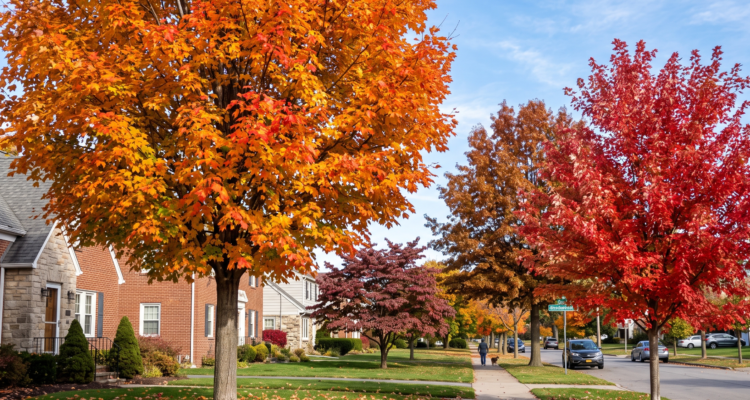
Every September, a distinct shift ripples through Erie County. The heavy humidity coming off Lake Erie begins to lift, replaced by that crisp, undeniable Western New York autumn air. For homeowners here, it is a signal that our landscapes are about to step into the spotlight. If you have been looking to elevate your property’s curb appeal before the winter snow sets in, selecting the right canopy is the most impactful choice you can make. When choosing the top 5 trees for autumn color in Amherst, NY, you aren’t just looking for quick, fleeting color; you need hardy, resilient species engineered to thrive in our unique local climate while delivering an absolute masterclass in seasonal transformation.
At Amherst Landscaping, our field team has spent decades studying how our native suburban soils, local microclimates, and regional weather patterns affect tree health and foliage vibrancy. In this guide, our local arborists break down the absolute best tree options for local yards, providing real-world horticultural data to help your property look its best this autumn.
Frequently Asked Questions
Q: When do leaves typically reach peak color in Amherst, NY?
A: Peak autumn color in the Buffalo-Niagara region generally occurs between the second and third weeks of October. However, properties closer to the water or experiencing different microclimates may see a slight variation in color changes due to regional temperature-moderating effects.
Q: Can I plant new autumn trees in the middle of summer?
A: While it is technically possible, planting during the high heat of summer puts severe stress on new root systems. We strongly recommend scheduling an installation in early spring or early autumn (September through October) when cooler air temperatures and increased seasonal rainfall allow roots to establish without drying out.
The Top 5 Trees for Brilliant Fall Color in Amherst
Amherst properties sit comfortably within USDA Hardiness Zone 6a to 6b. Our winters are cold, our summers are warm and humid, and our soil consists largely of heavy, moisture-retaining clay mixed with pockets of loam. The following five trees are selected specifically because they love these conditions and put on the most dramatic autumn shows in our area.
1. The Sugar Maple (Acer saccharum)
The sugar maple is the undisputed monarch of the New York autumn landscape. Sugar maples make up roughly 20% of all forest trees across New York State, and they perform beautifully in residential settings when given the proper space.
Autumn Hue Profile: A spectacular blend of fiery orange, glowing gold, and deep scarlet. The color often develops in layers, giving the canopy an iridescent, multi-toned appearance in early to mid-October.
Mature Footprint: 60 to 75 feet tall with a spread of 40 to 50 feet.
Amherst Soil Compatibility: Thrives in deep, well-drained loams but can adapt to our local clay as long as the planting site does not suffer from prolonged standing water. It prefers a slightly acidic to neutral soil pH.
Pro Landscaping Takeaway: Because sugar maples develop extensive, powerful root systems, our design team recommends planting them at least 15 to 20 feet away from concrete driveways, public sidewalks, or home foundations to prevent future hardscape lifting.
2. The Red Maple (Acer rubrum)
If you want deep, jaw-dropping crimson tones that stop traffic along Transit Road, the Red Maple is your go-to selection. Cultivars like ‘Autumn Blaze’ are exceptionally popular in Western New York for their reliable, rapid growth and reliable seasonal display.
Autumn Hue Profile: Intense, electric crimson and brilliant scarlet. Red maples typically shift colors a week or two earlier than other species, effectively extending your property’s seasonal visual appeal.
Mature Footprint: 40 to 50 feet tall with a spread of 30 to 40 feet.
Amherst Soil Compatibility: Highly adaptable. The Red Maple earned its botanical reputation by tolerating poorly drained, heavy clay soils better than almost any other native hardwood.
Pro Landscaping Takeaway: The rapid growth rate of certain red maple hybrids can occasionally lead to tight, V-shaped branch attachments that are susceptible to heavy snow and ice accumulation. Timely, strategic structural pruning when the tree is young will ensure a balanced, storm-resistant canopy.
3. The Sweetgum (Liquidambar styraciflua)
For homeowners seeking something unique that breaks away from traditional maples, the sweetgum delivers an unmatched, multi-colored spectrum that looks like a watercolor painting come to life.
Autumn Hue Profile: A striking “rainbow effect” featuring glossy yellow, bright orange, deep burgundy, and even dark purple tones appearing simultaneously on the same branch.
Mature Footprint: 60 to 75 feet tall with a spread of 40 to 55 feet.
Amherst Soil Compatibility: Prefers deep, moist, acidic soils but adapts remarkably well to our local clay-loam profiles. It handles seasonal moisture fluctuations with ease.
Pro Landscaping Takeaway: Sweetgums produce distinct, star-shaped leaves and spiky, golf-ball-sized seed pods (often called “gumball” pods). If you prefer a tidy lawn or have children who run barefoot, we highly recommend selecting fruitless modern cultivars like ‘Rotundiloba’ or planting the native variety away from primary walkways.
4. The American Beech (Fagus grandifolia)
The American Beech offers a more refined, classic aesthetic that bridges the visual gap between late autumn and the early days of a Buffalo winter.
Autumn Hue Profile: Warm golden-bronze and rich copper. A unique trait of the American beech is marcescence—the tendency of its dried, tan leaves to cling to the branches throughout the winter months, providing excellent texture and wind screening when other trees are bare.
Mature Footprint: 50 to 80 feet tall with an equally wide, stately spread.
Amherst Soil Compatibility: Prefers moist, well-drained, acidic to neutral soils. It dislikes compressed or waterlogged soils, making proper site preparation essential.
Pro Landscaping Takeaway: Beyond its bronze leaves, its smooth, silvery-gray bark provides gorgeous architectural interest against a snowy backdrop. Because its mature limbs become incredibly heavy, routine structural health checks are highly recommended.
5. The Flowering Dogwood (Cornus florida)
Not every property has the space for a massive 70-foot canopy tree. For homeowners in closer suburban developments or those looking to add an elegant accent under existing shade, the flowering dogwood is a stellar choice.
Autumn Hue Profile: Deep burgundy, plum, and rich purplish-red, accompanied by glossy, bright-red winter berries that act as a natural magnet for local songbirds.
Mature Footprint: 15 to 30 feet tall with a matching, rounded spread.
Amherst Soil Compatibility: Requires rich, well-drained soil with a healthy organic layer. It does best in partial shade, mimicking its natural home beneath forest canopies.
Pro Landscaping Takeaway: Dogwoods are more delicate than large maples. To protect their shallow root systems from harsh Western NY winter freezes, they require a generous 3-inch layer of organic bark mulch and consistent watering right up until the ground freezes.
Frequently Asked Questions
Q: How close to utility lines can I plant a sugar or red maple?
A: Because mature maples reach heights over 50 feet, they should be planted at least 30 feet away from overhead utility lines. For spaces directly under power lines, opt for smaller understory species like the Flowering Dogwood, which will naturally stay below the wires.
Q: Are the seed pods of the sweetgum tree dangerous to lawn mowers?
A: While they won’t destroy a heavy-duty commercial mower, standard residential mower blades can throw the hard, spiky pods across the yard, creating a minor safety hazard. If you want the rainbow foliage without the cleanup, ask our team specifically for a seedless cultivar.
Comparison Matrix: Selecting the Right Fit for Your Property
Tree Species
Mature Height (ft)
Primary Fall Colors
Best Soil Type
Growth Rate
Sugar Maple
60 – 75
Orange, Gold, Red
Deep, well-drained loam
Slow to Moderate
Red Maple
40 – 50
Intense Crimson, Scarlet
Adaptable; tolerates wet clay
Fast
Sweetgum
60 – 75
Yellow, Purple, Orange
Moist, slightly acidic
Moderate to Fast
American Beech
50 – 80
Golden-Bronze, Copper
Rich, well-drained upland
Slow
Flowering Dogwood
15 – 30
Burgundy, Deep Plum
Organic-rich, well-drained
Slow
Frequently Asked Questions
Q: Which tree from the list grows the fastest if I need quick shade?
A: The Red Maple (especially cultivars like ‘Autumn Blaze’) grows rapidly, often adding 2 feet or more of height per year under ideal conditions. The Sweetgum follows closely behind as a strong moderate-to-fast grower.
Q: Will an American Beech grow well in a crowded suburban backyard?
A: The American beech develops a massive, broad canopy over time. It is best suited for wide-open suburban yards, estate acreage, or large corner lots where its wide horizontal spread won’t crowd out neighboring homes or structures.
Pro-Level Fall Tree Care for Western New York Homeowners
Planting the right tree is only the first step. Ensuring your landscape retains its health and vibrant coloration year after year requires targeted seasonal maintenance.
Why Leaves Change Color: The brilliant reds and purples we love see their greatest development during autumns that feature warm, sunny days followed by crisp, cool nights (above freezing). This temperature drop triggers the tree to build up sugars within the leaf, accelerating the production of anthocyanin pigments. If a tree is stressed by drought or poor soil drainage, it will drop its leaves prematurely, skipping the color show entirely.
Essential Autumn Maintenance Steps
Deep Root Hydration: Don’t stop watering when the leaves drop. Trees continue drawing up moisture until the soil completely freezes. A deep soak in late October protects the root system from desiccation (drying out) during high-velocity winter winds.
Proper Mulching: Apply a 3-inch ring of wood mulch around the base of young trees to insulate roots and retain moisture. Always keep the mulch a few inches away from the bark itself—stacking mulch against the trunk (often called “mulch volcanoes”) traps moisture and invites fungal rot and pests.
Corrective Winter Pruning: The best time to trim structural limbs is late winter when the tree is fully dormant. Removing dead, crossing, or structurally weak branches prevents heavy ice loads from causing dangerous splits during severe winter storms.
Frequently Asked Questions
Q: How late into the fall season should I continue watering my new trees?
A: You should continue watering newly planted trees until the ground freezes hard, which typically happens in early to mid-December in Western New York. Even after the leaves fall, the roots remain metabolically active and need moisture.
Q: Is it safe to prune my autumn trees immediately after they drop their leaves?
A: It is highly recommended to wait until late winter (January through March) for major structural pruning work. Pruning immediately after leaf drop can sometimes stimulate late-season structural stress or open up wounds that won’t close properly before extreme sub-zero winter temperatures hit.
Connect With a Top-Rated Landscape Design Team Near Me
When searching for reliable planting services, property transformations, or certified tree care specialists near me, proximity and deep local knowledge matter. We provide expert consultations, precision tree installations, and comprehensive seasonal care tailored specifically to the unique microclimates of our immediate neighborhoods.
By partnering with a local team right in your neighborhood, you ensure that every plant chosen is acclimated to local conditions and backed by professionals who understand regional weather patterns. We routinely service residential properties, corporate parks, and new developments within the following immediate zones:
North Amherst / SUNY District: Serving properties near the SUNY Buffalo North Campus, Sweet Home Road, and the surrounding residential developments.
East Amherst / Transit Corridor: Providing proactive tree trimming, health assessments, and layout planning along the Transit Road axis and the Clarence border.
Central Amherst & Snyder: Managing historical mature canopies, deep-root feeding, and structural management near Main Street, Harlem Road, and the Village of Williamsville.
Eggertsville & Getzville: Correcting drainage challenges and preparing landscapes for heavy winter conditions near Ellicott Creek Park and Campbell Boulevard.
Frequently Asked Questions
Q: Do you offer residential planting and design services near me if I live right on the municipal border?
A: Yes. While our operational routing centers heavily within the Town of Amherst, our mobile service crews regularly design, install, and maintain properties in adjacent communities, including Williamsville, Clarence, the Tonawandas, and northern Cheektowaga.
Q: Can a local team visit my property near me to evaluate an old tree before winter?
A: Absolutely. We provide comprehensive on-site consultations throughout our local service area. A landscape specialist will evaluate your tree’s trunk stability, check for foundational root hazards in our local clay beds, and safely remove compromised limbs before winter storm patterns set in.
Ready to Elevate Your Property’s Curb Appeal?
Whether you want to install a stately new sugar maple as a beautiful property centerpiece or need professional tree trimming to preserve your established canopy before winter arrives, our team is right down the road.
Find Our Local Office & Get Directions:
ContactAmherst Landscaping today to schedule a comprehensive property consultation with our local outdoor specialists.