
Professional Grub Treatment for Amherst Lawns
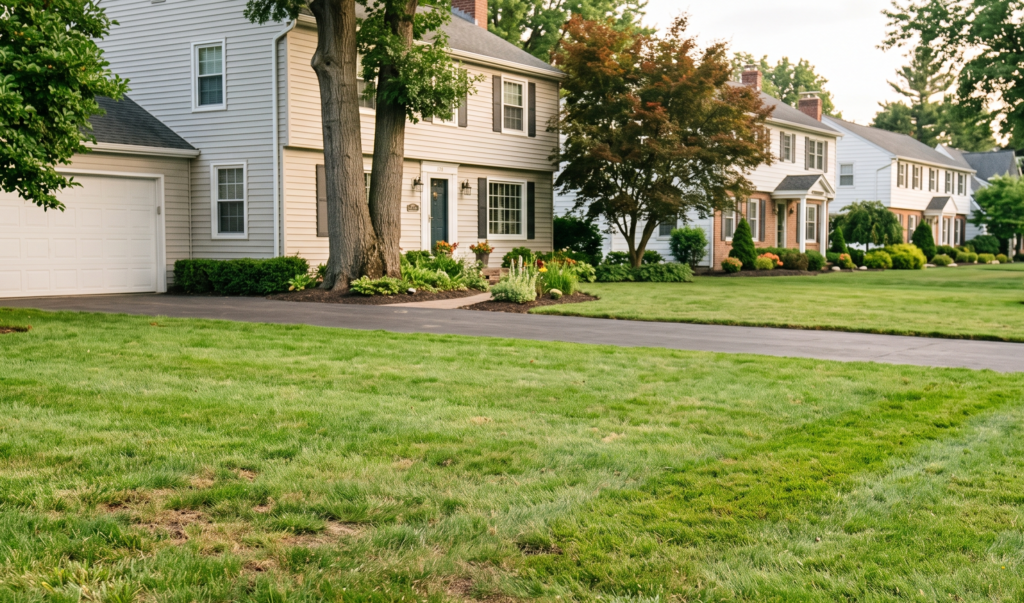
A lush, vibrant green yard is one of the greatest joys of homeownership, but beneath the surface, silent pests can quickly turn healthy turf into a brown, patchy wasteland. If you’ve noticed irregular dead patches or soft, spongy turf across your yard, you may be facing a subterranean beetle infestation. Investing in professional grub treatment for Amherst lawns is the most reliable way to protect your root zone, eliminate active larvae, and prevent severe turf damage before it takes hold. At Amherst Landscaping, our localized knowledge of Western New York soils, regional insect life cycles, and targeted lawn care strategies ensures your property stays resilient, healthy, and pristine through every season.
Understanding Lawn Grubs and Their Life Cycle in Amherst
Lawn grubs—often referred to as white grubs—are the immature larval stage of various scarab beetles, most notably European chafers, Japanese beetles, Asiatic garden beetles, and June beetles.
Beetle Life Cycle in Western New York:
[Adult Beetles Emerge] -> [Eggs Laid in Soil] -> [Fall Larvae Feed on Roots] -> [Overwinter Deep] -> [Spring Resurfacing]
(June – July) (July – August) (August – October) (Nov – March) (April – May)
During late spring and mid-summer, adult beetles mate and deposit hundreds of eggs beneath healthy turfgrass. Once these eggs hatch between July and August, the microscopic C-shaped larvae feed voraciously on grass root systems. Because roots are severed just beneath the thatch layer, the grass loses its ability to absorb water and essential nutrients. Without immediate intervention, a moderate grub infestation can destroy an entire lawn in a matter of weeks, leaving behind loose patches of dead grass that pull up effortlessly like a freshly unrolled carpet.
Frequently Asked Questions
What types of beetles cause grub damage in Amherst, NY?
The most common culprits across Erie County are the European chafer and the Japanese beetle. European chafers are particularly damaging because their larvae are active and feed later into the autumn and earlier in the spring than native species.
Can grubs survive the cold Western New York winters?
Yes. White grubs do not die off in sub-zero winter temperatures. As surface soil cools in late October and November, they tunnel 6 to 12 inches beneath the frost line to hibernate, resurfacing in early spring to feed before pupating into adult beetles.
4 Telltale Signs Your Amherst Lawn Has a Grub Infestation
Grubs work quietly beneath the soil line, making early visual detection essential before extensive root disruption leaves permanent damage across your yard.
- Spongy, Bouncy Turf Underfoot: When grubs chew through the fibrous root network, the structural integrity of the sod weakens. Walking across your grass will feel abnormally soft, springy, and hollow.
- The “Carpet Roll” Separation: If you grip a patch of browned grass and it lifts cleanly away from the soil with zero resistance—revealing small, off-white, curled larvae in the top two inches of dirt—you have an active infestation.
- Unexplained Animal Digging: Skunks, raccoons, opossums, and flocks of crows love dining on protein-rich grubs. If your lawn is being torn up overnight with small cone-shaped divots or flipped sod, wildlife is actively hunting beneath the surface.
- Drought-Like Patches That Don’t Respond to Irrigation: Irregular yellow and brown spots that remain dry and lifeless despite consistent watering usually indicate severed root systems rather than genuine dehydration.
Frequently Asked Questions
How do I distinguish grub damage from drought stress or fungus?
Drought-stressed turf remains firmly rooted in the soil when pulled, and fungal issues typically leave circular rings or visible lesions on individual grass blades. Grub damage causes the grass to detach completely from the topsoil with no root anchors holding it down.
How many grubs per square foot justify professional treatment?
Finding 1 to 4 grubs per square foot is standard for cool-season turf and rarely causes noticeable harm. However, a threshold of 5 to 10 or more grubs per square foot indicates a heavy infestation that will cause visible turf decline and requires immediate treatment.
Preventative vs. Curative Treatments: Science and Timing
Timing is critical when managing turf insects in Western New York. Applying the wrong product at the wrong time of the year wastes resources and leaves your lawn unprotected during peak feeding periods.
| Treatment Type | Optimal Timing in Amherst | Primary Objective | Active Mechanism |
| Preventative Treatment | Late May – Early July | Neutralizes newly hatched larvae upon emergence | Systemic absorption into the root zone |
| Curative Treatment | Late August–Mid-October | Knocks down active, large fall larvae | Fast-acting contact insecticide watered into thatch |
| Spring Rescue | April – Early May | Suppresses overwintered larvae before pupation | Targeted spot treatment to minimize early-season thinning |
Preventative applications are the gold standard for long-term turf defense. By introducing a systemic barrier into the root zone during early summer, newly hatched eggs are neutralized within hours of emergence. This eliminates root disruption altogether, keeping your turf intact and avoiding costly re-sodding or overseeding projects down the road.
Frequently Asked Questions
Why is mid-summer the ideal window for preventative grub control?
Preventative systemic treatments need time to move through the soil and absorb into the root tissue before beetle eggs hatch in late July and August. When young larvae take their first bite, the treatment stops them immediately before any turf damage occurs.
Can I use a preventative treatment in the fall if I see active damage?
No. Preventative chemistries work primarily on young, newly hatched larvae and act too slowly to stop large, mature grubs feeding aggressively in September and October. Fall outbreaks require fast-acting curative contact treatments.
Why DIY Grub Products Often Fall Short
Big-box retail shelves are lined with bags of granular insecticide, but property owners frequently find that DIY attempts yield mixed results or failed applications:
- Incorrect Active Ingredients: Preventative chemicals (such as chlorantraniliprole) will not knock down large, mature grubs in the fall, while quick-acting contact killers (like trichlorfon) offer zero residual protection against next season’s eggs.
- Inadequate Water-In Protocols: Most grub treatments require precisely timed post-application watering (typically 0.5 inches) to drive the active ingredients past thatch and directly into the root zone. Without proper calibration, granules remain on the surface where sunlight and air degrade them.
- Pollinator & Environmental Risks: Misapplying broad-spectrum insecticides risks harming beneficial pollinators and soil biology. Certified lawn care specialists use selective, pollinator-conscious formulations applied precisely when flowering weeds are not present in the turf canopy.
Frequently Asked Questions
Why do DIY grub applications often fail to work?
DIY failures usually stem from applying the wrong formulation for the current insect life stage, failing to calibrate spreader settings accurately, or not applying enough water immediately after treatment to carry the chemical through the thatch layer.
Are commercial-grade grub products safer for the environment than store-bought options?
Commercial-grade, professional treatments utilize targeted systemic formulations that bind specifically to insect receptors while minimizing impact on earthworms, beneficial soil microbes, and surrounding groundwater when applied by licensed technicians.
The Amherst Landscaping Professional Treatment Protocol
At Amherst Landscaping, we treat grub management as part of an integrated, holistic turf health ecosystem rather than a standalone chemical spray:
- Step 1: Soil & Turf Diagnostic Assessment
We inspect your lawn, sample high-risk zones (such as sunny slopes and thinned turf areas), and calculate grub density per square foot to determine whether preventative or curative action is needed. - Step 2: Calibrated Commercial-Grade Application
Using precision-calibrated broadcast equipment, our licensed technicians apply targeted treatments that penetrate evenly across your entire property without gaps, streaks, or excessive overlap. - Step 3: Post-Treatment Activation Guidance
We coordinate with your irrigation schedule or local weather forecasts to ensure the treatment is thoroughly watered down into the subsoil where grubs actively feed. - Step 4: Turf Repair, Aeration & Overseeding
If foraging animals or root damage have thinned out sections of your yard, we pair remediation with core aeration and overseeding to rebuild root density, fill in bare spots, and restore thick, healthy grass coverage.
Frequently Asked Questions
How soon is the lawn safe for children and pets after professional treatment?
Once liquid applications have completely dried or granular applications have been properly watered in and allowed to dry, your lawn is completely safe for normal family and pet activity.
Do I need core aeration after a grub infestation?
Core aeration is highly recommended following grub remediation. Aeration relieves compacted soil, breaks up excess thatch, and allows new grass seed, water, and nutrients to penetrate deep into the root zone to repair damaged areas rapidly.
Looking for “Grub Control Near Me” in Amherst, NY?
If you are searching for dependable lawn grub control near me or reliable landscaping services in Amherst, NY, choosing a dedicated local provider ensures your property receives care calibrated specifically to Erie County soil conditions and regional weather patterns.
We proudly provide preventative and curative grub management, aeration, and lawn restoration across all Amherst communities, including:
- Snyder (14226)
- Eggertsville (14226)
- Williamsville (14221)
- North Amherst / Getzville (14068)
- East Amherst (14051)
Frequently Asked Questions
How quickly can a local technician inspect my lawn in Amherst?
Because our crews operate daily throughout Amherst, Williamsville, and Snyder, we typically provide on-site lawn evaluations and diagnostic soil checks within 24 to 48 hours of your request.
Do you handle both residential and commercial properties in Erie County?
Yes. We service single-family residential homes, multi-family properties, corporate offices, and commercial grounds throughout Amherst and neighboring Western New York areas.
Find Our Amherst Lawn Care Team
Protect Your Amherst Property Today
Don’t let subterranean pests destroy the lawn you’ve worked hard to cultivate. Whether you need proactive summer protection or urgent fall remediation, our team brings the local expertise, professional equipment, and proven treatments necessary to keep your yard healthy year-round.
Ready to safeguard your lawn? Contact Amherst Landscaping at amherstlandscaping.com today to schedule your comprehensive property assessment and customized grub control treatment.
More from the blog
Snow and Ice Management: Professional Services Explained
There's a difference between a guy with a plow truck and a real snow and ice management operation, and most property owners…
Read Article
Snow Removal Equipment & Tools: Complete Buyer’s Guide
If you've ever watched a plow truck fly past your commercial lot at 5 AM and wondered what it actually takes to…
Read Article
Lawn Mowing Services in Buffalo NY for a Healthy, Beautiful Lawn
A healthy, well-maintained lawn can transform the appearance of your property, improve curb appeal, and create a more enjoyable outdoor space. For…
Read Article