
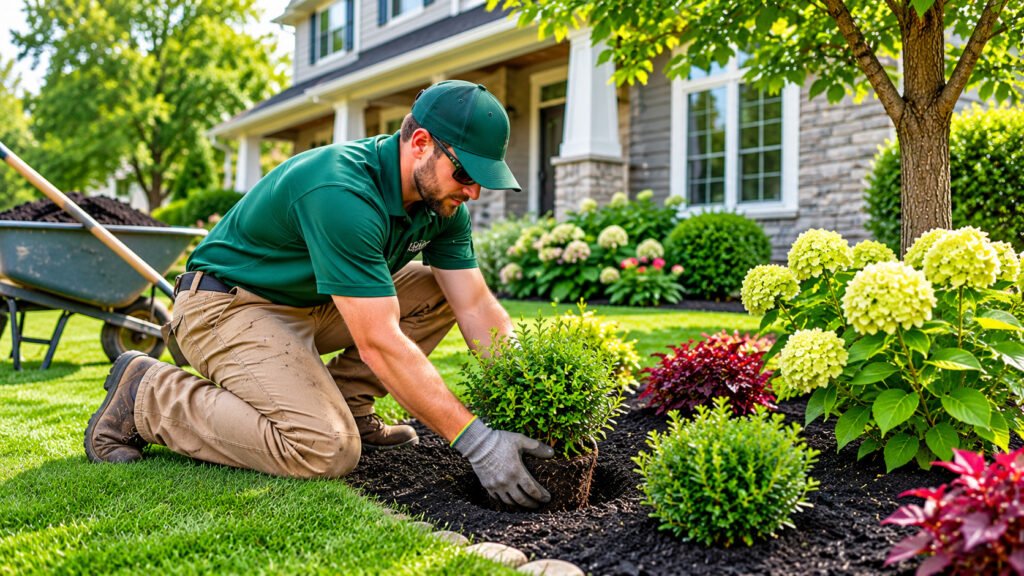
Choosing Landscape Contractors: What to Know
Hiring a landscape contractor is one of those decisions that looks simple until the process gets complicated quickly once you start making calls. The range of what different contractors charge for the same scope of work, the variation in what’s included in a quote, and the difficulty of evaluating experience without seeing past work firsthand are real challenges that homeowners in Geneseo and across the Western New York region run into regularly when trying to find someone they can trust with their property.
This isn’t about finding the cheapest option or the most elaborate proposal. It’s about finding a contractor who does the work correctly, communicates honestly, and leaves the property better than they found it. That standard is achievable, but it requires knowing what to look for before you sign anything.
Quick Answer
When choosing a landscape contractor, verify insurance and licensing, get at least two to three written quotes for the same scope, ask for local references you can actually contact, and read the contract carefully before signing. Price differences between quotes often reflect differences in scope, materials, or method, not just profit margin.
A contractor who answers questions directly, provides written estimates, and can show you comparable work in your area is worth more than the lowest bid from someone you can’t verify.
Why the Selection Process Matters More Than Most People Think
A landscaping project, whether it’s a full yard renovation, a retaining wall, a drainage correction, or seasonal maintenance, involves your property, your money, and in many cases, your home’s structural elements. A retaining wall built without proper drainage behind it fails within a few seasons.
A grading project that directs water toward a foundation rather than away from it creates a moisture problem that costs significantly more to fix than the original landscaping did. These aren’t hypothetical risks; they’re the situations that generate the calls contractors get to come fix what someone else did.
The selection process is where those outcomes get determined, not at the end of the project, and not when the problem shows up two years later. The time spent evaluating landscape contractors in Buffalo, NY, and surrounding areas before signing a contract is the time that protects you from outcomes you won’t see coming until they’re already expensive.
Verify Insurance and Licensing Before Anything Else
This is the step most homeowners skip or treat as a formality, and it’s the one that matters most if something goes wrong during or after the project.
General liability insurance protects your property if the contractor’s work causes damage: a retaining wall that falls on a fence, equipment that damages a water line, material that’s misapplied and kills established plantings. Workers’ compensation coverage protects you from liability if a worker is injured on your property. Without it, an injured worker may have a claim against your homeowner’s insurance rather than the contractor’s policy.
Ask for certificates of insurance, not just a confirmation that coverage exists. A certificate names the coverage amounts and the policy period and is issued directly by the insurance company. It’s a one-page document that any legitimate contractor carries as standard. A contractor who hesitates on this request or provides verbal assurance rather than documentation is telling you something important about how they operate.
Licensing requirements for landscape contractors in New York vary by the specific work being performed. Pesticide application requires a licensed pesticide applicator. Structural work like retaining walls may require a contractor’s license depending on the municipality and the scope of work.
Irrigation installation and backflow prevention work typically requires plumbing licensing. A contractor performing licensed work without the appropriate license creates liability for both parties.
What Good Landscape Contractor Reviews Actually Tell You
Online reviews are useful but limited, and reading them correctly produces better information than taking the star rating at face value.
Review volume matters just as much as the overall rating. A contractor with 4.8 stars from twelve reviews offers a different level of evidence than one with 4.6 stars from 187 reviews. More reviews from more projects across more seasons tell you more about consistent performance than a high rating on a small sample.
Look for specific detail in positive reviews. “They did a great job and were very professional” tells you almost nothing. “They rebuilt our retaining wall with proper drainage, and the follow-up on a minor grade adjustment two months later was handled without any pushback” tells you something about how the contractor actually works and handles post-job communication.
Pay attention to how negative reviews are responded to. A contractor who responds to a legitimate complaint with defensiveness or with an attack on the reviewer is showing you how they handle client disagreements. A contractor who acknowledges the concern and describes how they addressed it is showing you something different.
Landscape contractor reviews are most useful when paired with direct reference checks, calling actual clients rather than just reading what’s been posted publicly. Ask the contractor for two or three references from jobs similar in scope to yours, specifically from the last one to two seasons rather than projects from five years ago.
Understanding Landscape Contractor Pricing
Landscape contractor pricing is one of the most confusing aspects of the selection process because quotes for the same project can vary by 30 to 50 percent between contractors, and the reasons for that variation aren’t always obvious.
Material specifications drive significant cost differences. A quote for a paver patio using a basic contractor-grade paver is a different quote than one using a premium manufactured stone product from the same supplier. Both quotes may say “paver patio” without specifying the difference. Asking each contractor to specify the exact material, brand, product line, size, and thickness on the written estimate allows you to compare accurately.
Labor methodology affects price and outcome. A contractor who builds the base course in compacted layers and checks the level throughout the process is more likely to produce a stable result than one who rushes through preparation without proper checks. Both may quote “base preparation and paver installation.” The difference in methodology doesn’t show on the estimate; it shows in how the patio performs after three Western New York winters.
Subcontractor use versus in-house labor affects pricing and accountability. A contractor who subs out specialty work, irrigation, drainage, walls, to other contractors may have less direct control over quality on those portions of the project. This isn’t inherently a problem, but knowing who’s doing each part of the work and confirming that subcontractors are also insured is worth clarifying upfront.
Get quotes in writing, line-itemized to the extent possible. A one-paragraph quote that states a total price without breaking down material and labor components is much harder to evaluate against other quotes than a detailed estimate that shows what you’re actually paying for.
Questions to Ask Before Hiring
The questions you ask during the evaluation process tell you as much about a contractor’s professionalism as the answers themselves.
How long have you been working in this area? Local landscape contractors who have been working in Western New York for multiple seasons understand the specific soil conditions, drainage patterns, freeze-thaw cycles, and plant performance that affect how landscape work needs to be done here differently than in milder climates.
A contractor with experience in a different region may understand general landscaping principles but lack the local knowledge needed to account for Western New York’s specific growing and soil conditions.
Who specifically will be doing the work? The person who gives you the estimate isn’t always the person who manages the crew on the job. Knowing who your point of contact is during the project and how day-to-day decisions get made when you’re not on site is information that matters operationally.
What’s included in the cleanup and what happens if the project goes over scope? Scope changes during landscape projects are common; you dig and find a drainage problem that wasn’t visible from the surface, or the grading requires more material than the original estimate accounted for. How a contractor handles scope changes, whether they communicate before proceeding or present a larger number at the end, reflects their operating standards.
Do you pull permits when required? Certain landscape work, retaining walls above a specific height, drainage work that connects to municipal systems, and irrigation backflow prevention may require permits depending on the municipality. A contractor who pulls permits is operating transparently and on record. One who skips permits to save time and cost leaves you with unpermitted work that can create issues during a future property sale.
How to Evaluate Comparable Work
Asking to see comparable work, not just a portfolio of the contractor’s best projects, but work similar in scope and scale to what you’re planning, is the most direct way to evaluate whether a contractor can deliver what you’re hiring them for.
A paving contractor who shows you beautiful photos of large commercial installations may not have the same track record on residential-scale work with tight tolerances. A planting contractor who specializes in annual color installation may not have experience with the structural planting and soil preparation that a new landscape bed establishment project requires.
Ask to visit a completed project of similar scope, or at minimum, ask for references from clients whose projects were comparable. Talking to a homeowner whose retaining wall was installed two seasons ago, and seeing how it’s performed, tells you more than any estimate review or portfolio photo.
Amherst Landscaping has worked on landscape projects across Western New York for over a decade, and the references we provide are from actual clients on comparable projects, not selected showcase work that doesn’t represent typical results. That standard of reference availability is something worth expecting from any contractor you’re seriously evaluating.
Reading the Contract Before You Sign
A landscape contract should specify the scope of work in enough detail that both parties understand what’s included and what isn’t. Vague scope language in a contract is a source of disagreement when the project is underway; both parties may have different understandings of what was agreed to, and the contract is what resolves those disagreements.
Confirm that the contract includes: a detailed description of the work to be performed, the specific materials to be used, the project timeline with start and completion dates or ranges, the payment schedule, how scope changes will be handled and communicated, and the warranty terms for both materials and labor.
Payment schedule terms matter. A contractor who requires full payment before work begins is asking you to take on all the risk. A contractor who works with a deposit at signing and progress payments tied to project milestones aligns the payment schedule with the work completion, which is standard practice for legitimate contractors.
Best landscape contractors provide clear contracts as a matter of standard operating procedure, not because they were asked. If a contractor is reluctant to put project details in writing, that reluctance is telling you something.
Finding Reliable Local Landscape Contractors
For Geneseo and Livingston County homeowners, the landscape contractor pool includes both local operators familiar with the area’s specific conditions and Buffalo-area contractors who travel for projects. Both can deliver quality work, but the local knowledge factor is real; someone who has been working in the area long enough to know how specific soil types, drainage patterns, and microclimatic conditions affect landscape performance brings applied knowledge that isn’t available from a contractor who’s working the area for the first time.
Landscape contractors in Buffalo, NY, and the surrounding region who have established track records in Livingston County specifically are worth prioritizing over contractors who are new to the area, all other factors being equal. Local reputation is earned through repeat business and referrals in a specific community, and it’s a more reliable signal than marketing materials or website presentation.
Amherst Landscaping serves residential and commercial clients across the Western New York region, including Livingston County, with landscape contractor services ranging from seasonal maintenance to full property renovation. The starting point for any project conversation is an honest assessment of the site and a written estimate that reflects what the work actually involves.
Frequently Asked Questions
How do I verify a landscape contractor’s insurance in Western New York?
Ask for a certificate of insurance that names your project specifically as an additional insured for general liability and confirms active workers’ compensation coverage. The certificate is issued by the contractor’s insurance company, not by the contractor. Verify the policy period covers the duration of your project before signing any agreement.
What’s a reasonable deposit for a landscape project?
Ten to thirty percent of the project total is a typical deposit range for residential landscape work. Deposits above fifty percent before work begins are uncommon in legitimate contracting and shift financial risk entirely to the homeowner. Progress payments tied to project milestones, materials delivered, and phases completed are the standard for larger projects.
How many landscape contractor quotes should I get?
Two to three written quotes for the same defined scope is the practical standard. More than three produces diminishing returns unless the first three quotes vary dramatically and you need a fourth to understand why. Make sure each contractor is quoting the same scope and materials before comparing prices; otherwise, you’re comparing different things.
What’s included in landscape contractor pricing?
It varies by contractor and project. A complete quote should include materials (specified by product), labor, equipment, haul-away of existing material if applicable, and cleanup. Permits, if required, may be additional. Ask explicitly what’s included and what would generate additional charges before signing.
How do I check landscape contractor reviews effectively?
Look at volume alongside rating, read for specific project detail rather than general praise, and check how negative reviews are responded to. Supplement online reviews with direct reference calls to actual clients from the last one to two seasons; ask about post-project communication and whether the contractor addressed issues that came up after completion.
Do landscape contractors in New York need to be licensed?
Licensing requirements vary by the specific work being performed. Pesticide application requires a licensed applicator. Structural work, plumbing for irrigation, and electrical for lighting may require specific licenses depending on scope. Ask each contractor what licenses they hold and whether the work they’re proposing for your project requires them.
More from the blog
Landscape Design Ideas: Transform Your Yard Professionally
Buffalo yards work hard. They take lake-effect snow, clay soil that holds water, and a growing season that starts late and ends…
Read Article
Landscape Maintenance: Year-Round Care for Your Property
Most yards in Amherst don't fail all at once. They slip. A missed fall cleanup here, a mulch bed that never got…
Read Article
Professional Landscaping Services: Transform Your Outdoor Space
A beautiful outdoor space can make your property more inviting, functional, and enjoyable throughout the year. From a healthy green lawn and…
Read Article