Best Plants for Amherst’s Soil and Climate
Designing a stunning landscape requires more than simply choosing eye-catching varieties at the local nursery. True horticultural success relies entirely on working in harmony with your regional environment. For homeowners looking to cultivate an enduring, vibrant landscape, choosing the best plants for Amherst’s soil and climate is the foundation of a healthy yard. Nestled in Erie County, New York, Amherst features distinct geographic conditions—from the heavy, moisture-retentive clay soils near the Ellicott Creek floodplains to the unpredictable, snowy microclimates of Western New York. Selecting flora genetically tailored to these specific realities ensures your garden thrives naturally, minimising the need for constant maintenance and excessive watering.
Understanding the specific layout of your yard gives you a significant advantage. At Amherst Landscaping, we focus on identifying the sweet spot where soil composition, winter hardiness, and seasonal shifts intersect. By picking varieties that naturally thrive in our local conditions, you avoid the frustration of failing perennials and create a sustainable, high-performing landscape.
1. Navigating Amherst’s Soil Structure and Microclimates
To select the perfect palette of plants, we first have to examine the unique environmental factors of Amherst, NY. Our region falls squarely into USDA Hardiness Zone 6a, meaning your landscape features must be capable of enduring bitter winter lows down to -10°F. However, cold hardiness is only half the battle. Our summer months introduce high humidity and shifting precipitation patterns, demanding plants that can pivot seamlessly between wet springs and dry late-summer stretches.
Our crews use professional soil augers and digital pH probes daily across the region, and we can confirm that soil composition across the town of Amherst varies significantly, shifting almost yard by yard:
- The Clay Heavyweights: Many neighborhoods throughout Amherst—especially north of the bloated Ellicott Creek corridor—sit on dense, glacial till soils rich in clay. These soils hold onto nutrients exceptionally well, but compact easily and drain slowly. If your property suffers from pooling water, our team specialises in remediating poor drainage in North Amherst to protect your plant roots during wet spring thaws.”
- The Floodplain Silt: Properties closer to major local waterways often feature deep, silty soils. While highly fertile, these areas are prone to seasonal waterlogging, requiring flora that can tolerate “wet feet” without suffocating.
- The Urban/Suburban Mix: Developed residential plots frequently deal with stripped topsoil and compacted fill dirt, leaving a dense layer that requires hardy, adaptive root systems to break through.
Frequently Asked Questions
What plant zone is Amherst, NY?
The Town of Amherst, NY, falls under USDA Hardiness Zone 6a. When choosing perennials, shrubs, and trees, look for varieties rated to withstand winter temperatures down to -10°F to ensure they survive our Western New York winter seasons.
How do I know if I have clay soil or floodplain silt in my Amherst yard?
A simple squeeze test tells the story. If you take a handful of damp soil from your yard and press it together, clay soil will form a tight, sticky ball that holds its shape perfectly and feels slick. Silty floodplain soil will feel slippery and smooth like flour when wet but will crumble slightly more easily than pure clay under pressure.
2. Top Selections: The Best Plants for Amherst’s Soil and Climate
Working with Western New York’s diverse conditions becomes much simpler when you choose varieties that are native to the region or naturally resilient. Below is a curated selection of trees, shrubs, and perennials that consistently perform well in our local soil types and climate.
Resilient Shade & Flowering Trees
Trees form the structural backbone of your property, influencing both your home’s curb appeal and its overall market value. We incorporate these architectural elements into our custom landscape design services in Williamsville
to withstand heavy lake-effect snow loads.
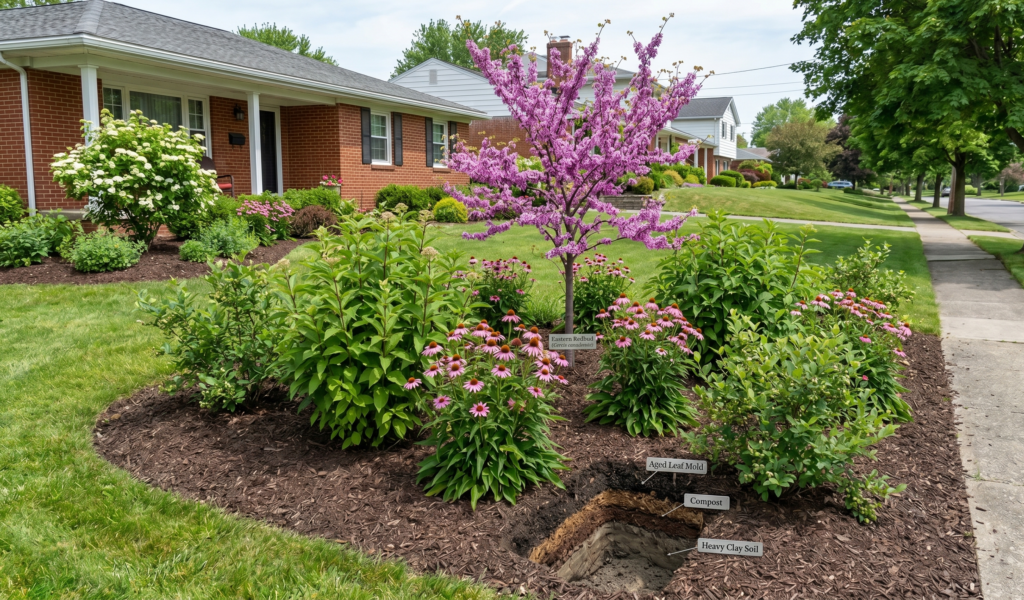
- Eastern Redbud (Cercis canadensis): An absolute standout for local front yards. This compact, understory tree erupts in brilliant pink-purple blooms in early May before its heart-shaped leaves emerge. It adapts easily to both acidic and alkaline conditions, handling our local silt and clay soils gracefully.
- River Birch (Betula nigra): Ideal for low-lying sections of your yard that collect standing water after a heavy downpour. Its deep root system thrives in damp soil, and its striking, peeling cinnamon-coloured bark provides gorgeous visual interest during our long winter months.
- Sugar Maple (Acer saccharum): A classic choice for larger backyards. It handles our Zone 6a winters effortlessly and delivers the iconic, fiery orange and yellow autumn foliage that defines New York’s falls.
Hard-Working Shrubs for Privacy and Structure
Shrubs define your outdoor living zones, soften architectural lines, and provide necessary privacy from nearby neighbors.
- Highbush Blueberry (Vaccinium corymbosum): This dual-purpose shrub is an excellent addition to local gardens. It offers delicate white spring flowers, delicious summer fruit, and a vibrant red hue in the fall. Blueberries thrive in the naturally acidic, moisture-rich pockets of soil found throughout parts of Erie County.
- Arrowwood Viburnum (Viburnum dentatum): A highly resilient native shrub that handles dense clay soil exceptionally well. It features white flat-topped flower clusters in spring, followed by dark blue berries that attract local songbirds.
- Oakleaf Hydrangea (Hydrangea quercifolia): Known for its large, cone-shaped white flower panicles and textured, oak-like leaves. It handles the transition from damp spring ground to dry late summers beautifully, turning a deep mahogany color as winter approaches.
Reliable Perennials for Consistent Seasonal Color
When profiling the best plants for Amherst’s soil and climate, perennials bring your garden beds to life year after year. The best choices for our area can handle freezing winter ground temperatures and push through dense soil structures without needing constant maintenance.
- Purple Coneflower (Echinacea purpurea): A staple for sunny flower beds. Its deep taproot allows it to cut through dense, clay-heavy ground, making it incredibly drought-tolerant once established. Its large blooms stand up to intense mid-summer heat and attract local pollinators.
- Wild Indigo (Baptisia australis): This exceptionally long-lived perennial features deep blue, pea-like flower spikes. It is virtually unfazed by poor soil structure or seasonal dry spells, making it an excellent choice for low-maintenance landscapes.
- Joe-Pye Weed (Eupatorium purpureum): Ideal for the damp, low-lying edges of your property. It grows into a magnificent, tall structural accent topped with large clusters of mauve flowers that butterflies absolutely love.
Frequently Asked Questions
Are hydrangeas a good choice for landscapes in Erie County?
Yes! Many varieties of hydrangeas perform beautifully in our climate. The Oakleaf Hydrangea and Smooth Hydrangea (Hydrangea arborescens) are particularly well-suited because they tolerate damp spring conditions and handle our seasonal shifts without requiring constant adjustments to soil chemistry.
What are some low-maintenance native plants that attract pollinators in our area?
If you want a low-maintenance yard that supports local ecosystem biodiversity, purple coneflower, Joe-Pye weed, black-eyed Susan, and New England aster are superb choices. They adapt naturally to local soil dynamics and require very little supplemental watering once their root systems are fully established.
3. Best Practices for Planting and Maintenance
Even the most resilient varieties need proper care during installation to ensure long-term success. If you are planting in our local soils, following a structured installation process helps prevent transplant shock and root issues.
1. Test and prep your soil before planting.
Dig a small hole and fill it with water to check your yard’s drainage. For dense clay, blend organic compost or aged leaf mold into the wider planting zone to naturally improve aeration and soil structure.
2. Dig a Wide, Shallow Hole: Installation Day.
Always dig your planting hole two to three times wider than the root ball, but no deeper. In clay-heavy soils, planting slightly shallow—leaving the top inch of the root flare just above the surrounding ground line—prevents the root system from drowning.
3. Backfill with Native Earth: Securing the Plant.
Fill the hole using the original native soil mixed with a bit of compost. Avoid filling the hole entirely with loose potting soil, as this creates a “bathtub effect” where water accumulates in the loose hole and rots the roots.
4. Apply Mulch and Water Deeply: Post-Planting Care.
Spread a 2-to-3-inch layer of shredded hardwood mulch across the planting bed to hold in moisture and keep soil temperatures even. For long-term care, setting up a routine for seasonal lawn and garden maintenance in Snyder ensures your landscape beds stay pristine year-round.
Frequently Asked Questions
How do I fix the heavy clay soil in my Amherst yard?
The most effective way to manage Amherst’s signature clay soil is by incorporating organic matter like leaf mold, well-composted manure, or clean compost into your garden beds. Avoid adding sand directly to clay, as this can inadvertently create a concrete-like texture. For challenging areas, designing raised garden beds or planting resilient native species with deep taproots is highly effective.
When is the best time of year to plant trees and shrubs in Western New York?
The ideal planting windows in Amherst are early spring (just after the frost leaves the ground in late April or May) and early autumn (September through October). Planting during these periods allows root systems to establish securely without having to fight intense mid-summer heatwaves or freezing winter soils.
4. Looking for a Certified Landscape Design Expert Near Me?
If you are a homeowner searching for a trusted, local landscaping company near me to transform your property, proximity and regional expertise are everything. A beautiful landscape requires team members who spend their winters navigating the same icy conditions and their summers handling the exact same microclimates as you do.
From our central location, our service trucks travel daily down Main Street, Millersport Highway, Sweet Home Road, and Transit Road to deliver premium landscape design and regular lawn care. We serve clients across the entirety of our community, explicitly covering postal codes 14221, 14226, 14228, and 14051, including the following:
- Williamsville & Snyder: Navigating established properties with mature tree root systems, complex landscape beds, and varying soil profiles near the Onondaga Escarpment.
- Eggertsville & Clearfield: Helping homeowners revitalises historic landscapes and optimises drainage for compact suburban lots.
- Getzville, Swormville, & East Amherst: Providing comprehensive soil remediation, new lawn installations, and custom hardscaping for newer residential developments north of North French Road dealing with heavily compacted contractor fill dirt.
By keeping our operations hyper-local, we guarantee fast response times, a deep familiarity with local municipal zoning guidelines, and an unmatched understanding of Western New York’s unique growing conditions.
Frequently Asked Questions
How far does your local service crew travel for landscape installation?
We handle projects across the entire town of Amherst and its closely bordering communities. If you live within a 15-to-20-minute drive of the University at Buffalo North Campus area or near the I-290 Lockport Motorway corridors, you are directly inside our primary daily service area.
Do you handle commercial landscaping properties in Erie County or just residential yards?
We specialise in both! Our crews are fully equipped to manage expansive commercial business parks, retail shopfront green spaces along major corridors, and residential estate gardens throughout the region.
Let’s Build Your Dream Landscape Together
Every property has its own unique combination of sun exposure, drainage patterns, and soil conditions. Whether you are dealing with heavy clay in a new development or looking to incorporate hardy native species into an established yard, choosing the best plants for Amherst’s soil and climate is the key to an outdoor space that gets more beautiful every year.
At Amherst Landscaping, we bring decades of hands-on, local experience to every project across Erie County. Our team handles everything from custom design and soil conditioning to precise installation and ongoing maintenance. Let us help you take the guesswork out of gardening and build a thriving, resilient yard you’ll love for years to come.
Ready to transform your outdoor space? Explore our local specialized services:
Schedule a professional yard and soil consultation
Explore low-maintenance native garden designs
More from the blog

Snow Removal Equipment & Tools: Complete Buyer’s Guide
If you've ever watched a plow truck fly past your commercial lot at 5 AM and wondered what it actually takes to…
Read Article
Lawn Mowing Services in Buffalo NY for a Healthy, Beautiful Lawn
A healthy, well-maintained lawn can transform the appearance of your property, improve curb appeal, and create a more enjoyable outdoor space. For…
Read Article
Snow Removal in Buffalo, NY: Your Complete Local Guide
If you've lived here more than one winter, you already know: Buffalo doesn't do "light dusting." We do lake-effect walls of snow…
Read Article