The Ultimate Guide to Landscaping in Amherst, NY
Whether you are looking to boost your curb appeal in Eggertsville, create a private backyard oasis in East Amherst, or completely redesign a commercial property near the SUNY Buffalo North Campus, navigating our local climate is the key to a successful outdoor investment. Welcome to The Ultimate Guide to Landscaping in Amherst, NY, where we break down exactly how to build a stunning, sustainable outdoor space that survives harsh Western New York winters and thrives during our beautiful summers. From managing dense clay soils to picking the right native perennials, this comprehensive guide covers everything local homeowners need to know to get the job done right.
Understanding the Amherst Microclimate & Clay Soil
Amherst sits comfortably within USDA Hardiness Zone 6a, meaning our plants need to tolerate winter lows dipping down to −10°F. However, being in the backyard of Lake Erie and Lake Ontario brings unique atmospheric challenges, like intense lake-effect snow loads, high wind shears off the Niagara River plain, and a highly variable spring freeze-thaw cycle.
- The Soil Profile: Much of Erie County is notorious for heavy, poorly draining structural clay. This dense soil retains moisture for far too long in the spring—potentially rotting root zones—and bakes into a brick-like consistency during dry July stretches.
- The Drainage Dilemma: Because the topography across much of the town is relatively flat, pooling water is a frequent complaint for homeowners, particularly in newer subdivisions near Getzville or areas bordering local floodplains.
- The Fix: Never plant directly into raw, unamended clay. Always amend your garden beds with rich organic matter or leaf compost (which you can source directly from the Town of Amherst Compost Facility on Smith Road). For severe drainage issues, installing French drains or building dedicated raised beds is standard regional practice.
Frequently Asked Questions
How do I test my soil’s pH and composition in Erie County?
You can purchase basic testing kits at local home improvement centres along Niagara Falls Boulevard, or for a highly detailed laboratory analysis, you can send a sample to the Cornell Cooperative Extension of Erie County. They provide precise readouts of your soil chemistry, organic matter percentages, and custom amendment recommendations.
Why is my lawn pooling water every single spring?
This is usually caused by the natural compaction of our native heavy clay soil combined with flat local grading. Core aeration in the spring or fall helps break up this hardpan layer, allowing air, water, and nutrients to penetrate back down into the root zone instead of sitting on top.
Best Plant Selections for Western New York
To ensure your landscape survives the winter and requires minimal chemical inputs, incorporating native and highly adaptive plants is your safest choice. Native flora has spent thousands of years adapting to our exact precipitation levels, pest pressures, and soil profiles.
Selecting the Right Foliage
Choosing the wrong plant for the wrong spot leads to dead foliage and wasted money. Use this quick reference guide to select varieties proven to survive in our corner of New York:
| Plant Type | Top Recommendations for Amherst | Benefits & Growth Habits |
| Shade Trees | Sugar Maple, Red Oak, River Birch | Excellent fall color; highly tolerant of local clay soils; provides vital canopy shading. |
| Evergreens | Eastern Red Cedar, White Pine, Arborvitae | Provides essential year-round privacy and acts as a windbreak against bitter winter gusts. |
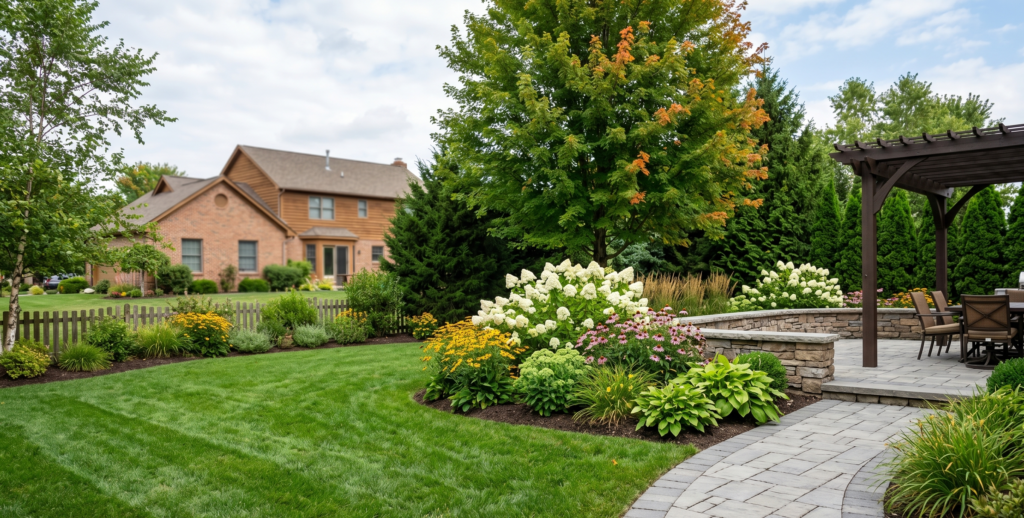
| Perennials | Coneflower (Echinacea), Black-Eyed Susan, Hosta | Low maintenance, pollinator-friendly, and returns reliably every single spring. |
| Flowering Shrubs | Panicle Hydrangea, Oakleaf Hydrangea | Long-lasting summer blooms that hold up well in partial shade and handle damp spring soil. |
Deer Warning: Amherst’s white-tailed deer population is incredibly active, especially near nature preserves like Walton Woods, the Glen Park area, or the Ellicott Creek trail system. Avoid planting unprotected hostas, tulips, or arborvitae unless you treat them with repellents or use protective fencing. Instead, opt for deer-resistant options like lavender, boxwood, Russian sage, and ornamental grasses.
Frequently Asked Questions
What are the best shade-tolerant plants for canopy-covered Amherst backyards?
If your yard is heavily shaded by mature maples or oaks, stick to perennials like hostas, bleeding hearts, astilbes, and coral bells (Heuchera). For shrubs, the oakleaf hydrangea handles partial shade beautifully.
When is the absolute deadline for planting new items in the fall?
Ideally, you want all new trees and shrubs in the ground by mid-to-late October. This gives the root systems at least 4 to 6 weeks to establish before the ground completely freezes over, which typically occurs by mid-December.
The 4-Season Amherst Landscaping Timeline
Proper timing makes or breaks a landscape. Western New York has a compressed growing season, making a strict schedule essential for lawn care, planting success, and winter survival.
Early Spring Cleanup
April
Remove winter debris, clear out dead perennial stalks, rake out thatch from the lawn, and apply a fresh 2-to-3-inch layer of hardwood mulch to retain moisture and suppress aggressive spring weeds.
Planting & Hardscaping
May – June
Install new trees, shrubs, and perennials once the threat of hard frost passes (typically mid-May). This is also the ideal window for pouring concrete patios, laying pavers, or building stone retaining walls.
Summer Maintenance
July – August
Transition to deep, infrequent watering cycles early in the morning to prevent fungal diseases. Keep mower blades high (3 to 3.5 inches) to protect lawn roots from summer heat stress and drought.
Fall Prep & Winterization
September – October
Core aerate and overseed your lawn to repair summer patches. Plant spring-blooming bulbs like tulips and daffodils. Wrap vulnerable young shrubs in burlap to shield them from heavy snow loads and windburn.
Frequently Asked Questions
How often should I water my lawn during a dry Amherst summer stretch?
Lawns generally need about 1 inch of water per week. It is much better to water deeply once or twice a week in the early morning than to give it a light sprinkle every day. Deep watering forces the roots to grow downward, making the turf significantly more drought-resistant.
What type of grass seed works best for overseeding in Western New York?
Cool-season grass blends are mandatory. Look for professional mixtures containing Kentucky Bluegrass (for sun and traffic durability), Perennial Ryegrass (for quick germination), and Fine Fescues (for shaded zones under trees).
Hardscaping: Patios, Walkways, and Retaining Walls
Because our ground undergoes massive shifts during the winter freeze-thaw cycle, hardscaping in Amherst requires meticulous structural preparation.
- The Frost Line: In Western New York, the frost line can extend down 36 to 42 inches. If a patio or retaining wall base isn’t dug deep enough, the expanding frozen groundwater will heave your stones, causing uneven walkways and cracked structures by spring.
- Material Choice: For patios, interlocking concrete pavers are often preferred over solid poured concrete. If the ground shifts slightly, pavers can flex and be individually adjusted, whereas solid concrete is prone to permanent cracking under WNY winter conditions.
- Base Preparation: A minimum of 4 to 6 inches of compacted crushed stone base, topped with a sharp bedding sand layer, is mandatory for walkways. For driveways or heavy retaining walls, that base needs to be even thicker.
Frequently Asked Questions
Do I need a building permit to construct a backyard patio in Amherst?
Simple unroofed patios laid directly at ground level generally do not require a building permit, but they must still adhere to your property’s boundary setback lines. If your patio project involves raised decks, steps higher than 30 inches, or permanent roof structures, you must submit formal plans to the Town Building Department.
How can I protect my expensive stone pavers from salt damage in the winter?
Avoid using standard rock salt (sodium chloride) on high-end paver patios or concrete walkways, as it chemically attacks and pits the stone surface. Instead, use safer calcium chloride or magnesium chloride-based ice melts, or simply stick to plain sand for traction.
Local Permits and Regulations to Remember
Before you dig up your front yard, install a massive hardscape feature, or change the grading of your land, keep these Town of Amherst codes and practices in mind:
- Call 811 Before You Dig: Amherst has widespread underground utility infrastructure, including gas, electric, and fibre-optic lines. Always call 811 to have your property marked before installing fence posts, trees, or deep retaining walls. It’s the law, and it saves lives.
- Tree Removal Restrictions: Under the Town of Amherst Tree Law (Local Law 8-1992), mature trees identified on approved site plans or within specific public easements cannot be cut down without a formal Tree Removal Permit from the town’s highway or engineering departments.
- Grading and Drainage: You cannot alter the grade of your property if it causes stormwater runoff to pool onto a neighbor’s property. The Town of Amherst strictly monitors drainage complaints, so any major grading work should be reviewed by a professional civil engineer or licensed landscape architect.
- Hiring a Professional: If you choose to outsource your project, ensure your contractor holds a valid Town of Amherst landscaper’s licence. The town requires all commercial landscapers to register their vehicles and carry proper liability and worker’s compensation insurance to protect local property owners.
Frequently Asked Questions
Can I dump my lawn clippings and organic yard waste directly into the street?
No. The Town of Amherst strictly prohibits placing yard waste, leaves, or cut branches into the street or inside public drainage ditches, as this clogs the storm sewers and causes local flooding during heavy rainstorms. Use approved biodegradable lawn waste bags or containers for scheduled curbside pickup.
How do I check if a contractor is legally licensed with the Town of Amherst?
You can contact the Town Clerk’s office or check the official Town of Amherst website portal. Legitimate local landscape operations will happily provide their current town licence number along with proof of insurance up front.
Looking for Top-Rated Landscaping Near Me?
If you are a property owner searching for a professional landscaping company near me or reliable lawn care services near me within the Northtowns, proximity and local knowledge matter. Serving homeowners across the entire town, our service area encompasses all primary residential corridors, including:
- North Amherst / Williamsville (14221, 14231)
- East Amherst (14051)
- Eggertsville & Snyder (14226)
- Getzville (14068)
By hiring a localised crew that operates daily along Sheridan Drive, Millersport Highway, and Transit Road, you eliminate travel delays and work with team members who know exactly how to handle the unique micro-property variables found in your specific neighborhood block.
Frequently Asked Questions
How quickly can a local landscaping team respond to service calls near me?
By choosing a company physically based right here in the Amherst-Williamsville area, travel times are minimised. Routine maintenance crews are usually scheduled by neighborhood zones, meaning someone is likely already operating within a few blocks of your home on any given weekday.
Are local landscaping companies near me equipped to handle Town of Amherst commercial regulations?
Yes, true local contractors maintain dedicated commercial accounts with local municipal suppliers and stay fully compliant with all town-specific environmental ordinances, ensuring your project faces zero structural or legal delays.
Our Amherst Service Location & Verified Reviews
When looking for professional landscaping support, look for local institutions with deep roots in Erie County. Check verified client reviews on our official Google Business Profile, browse real unedited images of our local projects, and track our service crews live across the region. Partnering with professionals who truly understand our unique Niagara Frontier geography ensures your outdoor investment will stand the test of time.
More from the blog

Snow Removal Equipment & Tools: Complete Buyer’s Guide
If you've ever watched a plow truck fly past your commercial lot at 5 AM and wondered what it actually takes to…
Read Article
Lawn Mowing Services in Buffalo NY for a Healthy, Beautiful Lawn
A healthy, well-maintained lawn can transform the appearance of your property, improve curb appeal, and create a more enjoyable outdoor space. For…
Read Article
Snow Removal in Buffalo, NY: Your Complete Local Guide
If you've lived here more than one winter, you already know: Buffalo doesn't do "light dusting." We do lake-effect walls of snow…
Read Article