Boxwood Care Guide for Amherst, NY Homeowners
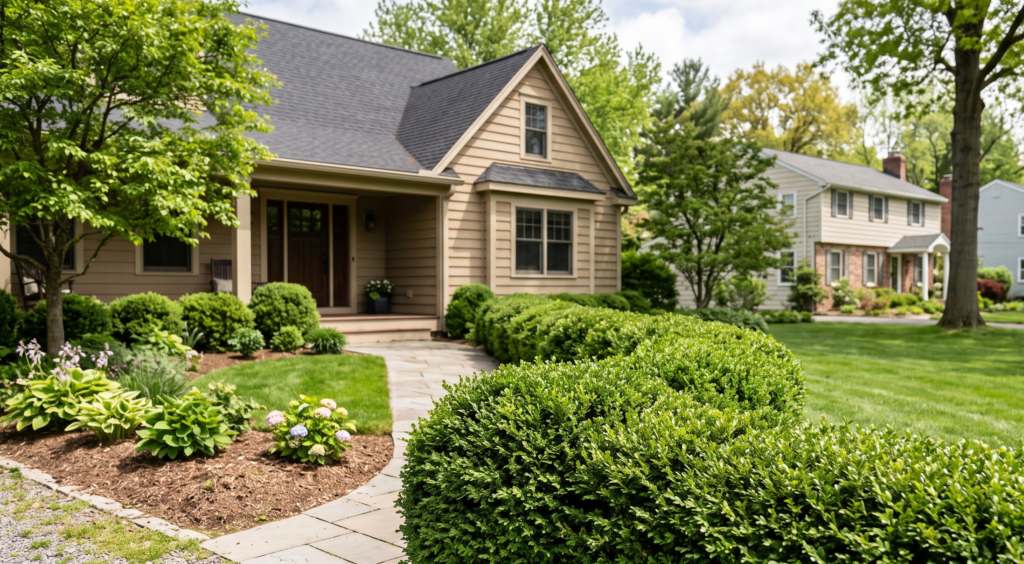
Boxwood shrubs (Buxus) are a classic feature in Western New York landscapes. From established properties in Williamsville and Snyder to modern suburban developments near East Amherst and Eggertsville, these resilient evergreens deliver clean lines, rich green foliage, and year-round architectural framing. However, keeping boxwoods healthy in the Town of Amherst requires an understanding of Erie County’s unique climate, severe lake-effect winter conditions, and specific heavy clay soils.
In Amherst, NY—where lake-effect snowstorms sweep off Lake Erie and humid summer stretches create ideal conditions for fungal leaf pathogens—boxwoods require proactive, localized care. Whether you are maintaining formal English boxwood hedges or planting hardy Korean cultivars, this comprehensive guide covers everything you need to keep your landscape looking its best in every season.
Understanding Amherst, NY’s Climate and Soil for Boxwoods
Amherst falls into USDA Hardiness Zone 6a. While boxwoods are well-suited for this zone, Western New York presents distinct environmental challenges: heavy lake-effect snow loads, frequent freeze-thaw cycles in late winter, and dense, moisture-retentive soils.
Soil Profile Across Erie County & Amherst
Boxwoods thrive in well-draining soil with a pH between 6.5 and 7.2. Soil composition across Amherst varies considerably depending on your neighborhood:
- North Amherst / Transit Road Corridor: Dominates in heavy lacustrine clay that holds moisture for extended periods after rain or snowmelt.
- Williamsville & Snyder: Features limestone-influenced soils and glacial till that offer slightly better drainage but can turn compact over time.
Boxwoods cannot tolerate waterlogged roots (“wet feet”). In Amherst’s heavy clay, excess moisture leads directly to Phytophthora root rot, causing yellowing leaves and branch dieback. Before planting, always incorporate compost or fine bark chips into native Amherst clay to improve internal drainage.
Frequently Asked Question
How do I know if my Amherst soil needs pH adjustment for boxwoods?
A soil test through the Cornell Cooperative Extension of Erie County will reveal your exact pH. If your soil pH drops below 6.0, apply agricultural lime in early spring or fall to bring it back to the ideal 6.5–7.2 range.
Can boxwoods tolerate salt spray from road salting in Western NY winters?
Road salt is harsh on evergreens. Position boxwoods at least 4–5 feet back from driveways and roadsides along Transit Rd or Sheridan Dr, or set up burlap shields before winter begins.
Planting Boxwoods for Long-Term Success
Proper installation is critical for long-term health in Western New York. In Amherst, the ideal planting windows are early spring (late April to May), after the ground thaws, or early fall (September to mid-October), well before the ground freezes.
Step-by-Step Planting Best Practices
- Location Selection: Choose a spot receiving full sun to partial shade (4–6 hours of sunlight daily). Shelter from prevailing westerly winds—such as near an eastern house wall or evergreen windbreak—is optimal.
- Digging the Hole: Dig a hole two to three times wider than the root ball, but no deeper. Set the top of the root crown about 1 inch higher than the surrounding soil to encourage surface drainage away from the stem.
- Soil Preparation: Mix extracted native clay soil with equal parts organic compost to encourage root penetration without creating a sunken water trap.
- Backfilling & Watering: Water thoroughly as you backfill to settle air pockets without excessively compacting the root zone.
Frequently Asked Question
Which boxwood varieties handle Buffalo/Amherst winters best?
Korean boxwoods (Buxus sinica var. insularis) and cold-hardy hybrids like ‘Green Mountain’, ‘Winter Gem’, and ‘Green Velvet’ perform exceptionally well in Zone 6a, maintaining strong green color through heavy snow.
How far apart should I plant boxwoods for a continuous hedge?
For a continuous formal hedge in Amherst landscapes, space medium-sized cultivars 18 to 24 inches apart center-to-center.
Watering and Mulching Strategies
Balanced hydration keeps boxwoods resilient against cold weather and summer drought stress.
SEASONAL WATERING & MULCH CHART FOR AMHERST, NY
┌─────────────┬──────────────────────────┬──────────────────┬──────────────────┐
│ Season │ Frequency / Method │ Mulch & Care Focus │
├─────────────┼──────────────────────────┼─────────────────────────────┤
│ Spring │ 1x/week (if rainfall <1″) │ Apply 2″ dark bark mulch │
│ Summer │ 1-2x/week at soil level │ Keep mulch off trunk base │
│ Autumn │ Deep soaking before frost │ Build root moisture reserve │
│ Winter │ Dormant (no irrigation) │ Burlap/windbreak protection │
└─────────────┴──────────────────────────┴─────────────────────────────┤
Watering Technique Matters
- Drip Irrigation Over Overhead Sprinklers: Avoid wetting boxwood leaves directly. Overhead watering creates high humidity inside the canopy, which encourages fungal pathogens like boxwood blight and Volutella. Always water at ground level.
- Pre-Winter Soaking in October/November: Before Erie County soils freeze solid, give your boxwoods two or three deep soakings. Evergreens lose moisture through their leaves continuously. If the root zone freezes dry, severe winter burn occurs come March.
Mulching Guidelines
Layer 2 to 3 inches of shredded dark bark or hardwood mulch over the root zone. Mulch insulates roots against winter freeze-thaw cycles and conserves summer soil moisture. Keep mulch 2 to 3 inches away from the main trunk base to prevent bark decay and discourage voles from nesting.
Frequently Asked Question
Why should mulch never touch the base of the boxwood stem?
Piling mulch against the trunk retains excess moisture against the bark, causing stem rot and giving overwintering rodents a safe place to chew on vital vascular tissue.
How much water do young boxwoods need during Western NY summer heatwaves?
Young shrubs need about 1 inch of water weekly. During dry mid-summer spells, provide a slow, deep root soak twice a week.
Pruning and Shearing: Timing and Technique
Pruning preserves structural shape and promotes canopy airflow, which is essential for disease prevention.
The Best Time to Prune in Amherst, NY
- Primary Pruning (Late Spring): Prune in late May or early June after the bright-green spring growth flush has fully hardened into a darker green.
- Light Touch-ups (Mid-Summer): Perform minor touch-up cuts in July.
- Avoid Autumn Pruning: Never prune boxwoods after August 15th. Late pruning stimulates tender new shoots that will freeze and die during the first Western NY frost.
Thinning vs. Shearing
Power hedge shearing creates a dense outer shell of leaves, blocking light and airflow from entering the center of the plant.
To maintain internal health:
- Perform selective hand-thinning every spring.
- Cut out dead, damaged, or crossing branches inside the inner canopy using sharp pruners.
- Remove small twig clusters across the outer shell to open up light channels into the shrub’s core.
Frequently Asked Question
Can I hard-prune an overgrown boxwood in Amherst?
Avoid removing more than one-third of the foliage in a single season. Stagger major rejuvenation pruning over two to three consecutive spring seasons.
How should I clean my pruning tools between shrubs?
Sanitize blades with 70% isopropyl alcohol or a 10% bleach spray between plants to prevent transferring fungal spores across your yard.
Managing Common Boxwood Pests and Diseases in Western NY
Monitoring pests and fungal diseases ensures long-term hedge vitality. The Cornell Cooperative Extension keeps close watch on broadleaf evergreen pathogens in Erie County.
1. Boxwood Blight (Calonectria pseudonaviculata)
An aggressive fungal disease that leads to severe leaf loss.
- Symptoms: Dark brown circular leaf spots, distinct black stem lesions (streaks), and rapid defoliation starting low in the canopy.
- Control: Avoid overhead irrigation, clean tools thoroughly, and plant blight-resistant varieties like Korean cultivars. Collect and bag dropped leaves immediately.
2. Volutella Blight (Pseudonectria buxi)
A secondary fungal infection that often follows winter damage or pruning wounds.
- Symptoms: Leaves turn straw-colored or reddish-orange in spring, with pale salmon-pink spore clusters under leaves during humid weather.
- Control: Prune out infected branches during dry summer weather and improve internal canopy ventilation through thinning.
3. Boxwood Leafminer (Monarthropalpus flavus)
Small midge larvae that feed inside the leaf tissue over winter.
- Symptoms: Blistered, yellowish, puckered foliage and unthrifty growth in late spring.
- Control: Prune off heavily infested foliage in spring before adult midges emerge, or consult a local landscape specialist for targeted applications.
4. Box Tree Moth (Cydalima perspectalis)
An invasive pest spreading across regions near the Great Lakes.
- Symptoms: Heavy leaf skeletonization, fine webbing throughout the canopy, and noticeable frass (droppings).
- Control: Inspect inner foliage routinely. Biological sprays containing Bacillus thuringiensis kurstaki (Btk) target young caterpillars effectively.
Frequently Asked Question
How can I tell boxwood blight apart from standard winter burn?
Winter burn causes leaves to turn tan or bronze, but they usually remain on the stems. Boxwood blight leaves dark spots and black stem streaks, causing leaves to drop off rapidly.
Are there non-boxwood alternatives if blight is present in my neighborhood?
Yes! Great alternative evergreen options for Amherst include inkberry holly (Ilex glabra). ‘Gem Box,’ Japanese Holly (Ilex crenata), and Dwarf Yew (Taxus).
Protecting Amherst Boxwoods Through Lake-Effect Winters
Winter burn and heavy snow damage are the main winter threats in Erie County. Strong westerly winds pull moisture from leaves while frozen ground prevents the roots from replacing it.
WESTERN NY WINTER PROTECTION STRATEGY
[ Directional Wind Protection ] [ Heavy Snow Management ]
│ │
┌────────────┴────────────┐ ┌────────────┴────────────┐
│ Install burlap screens │ │ Gently brush off heavy │
│ on north/west exposures │ │ lake-effect snow loads │
└─────────────────────────┘ └─────────────────────────┘
│ │
┌────────────┴────────────┐ ┌────────────┴────────────┐
│ Keep burlap 6″ away │ │ Avoid shaking frozen │
│ from touching leaves │ │ branches to stop breaks │
└─────────────────────────┘ └─────────────────────────┘
Winterizing Action Plan
- Apply Anti-Desiccant Sprays: Apply a protective anti-desiccant spray in late November and again during a mild mid-winter thaw (over 40°F) to coat leaves and slow down moisture loss.
- Erect Burlap Windbreaks: For exposed yards—especially near open fields or roadways along Maple Rd or Transit Rd—set wooden stakes around boxwoods and wrap burlap on the windward side. Keep the top open for light and air.
- Manage Heavy Lake Effect Snow: Heavy, wet snow can split multi-stemmed boxwoods. Gently sweep snow off branches using an upward motion with a broom. Never shake ice-laden branches, as cold stems break easily.
Frequently Asked Question
Is it safe to wrap burlap directly around my boxwood shrubs?
Do not wrap burlap tightly against the foliage. Tightly wrapped burlap traps moisture, blocks light, and can crush branches under snow weight. Attach burlap to wooden stakes set 6 inches away from the leaves.
When should I take down the burlap winter screening in Amherst, NY?
Remove burlap screens in late March or early April once winter winds calm and the ground thaws enough for roots to absorb water.
Finding Reliable Boxwood & Landscaping Care Near Me in Amherst, NY
When searching for “boxwood care near me” or “landscaping services in Amherst, NY,” you need a team familiar with Western New York soil profiles, plant pathology, and harsh winter conditions. Proper boxwood management requires experienced horticulturists who understand pruning timing, disease prevention, and seasonal protection.
Local Service Areas
We provide comprehensive boxwood installation, disease care, and landscape maintenance throughout Amherst and northern Erie County, including:
- Williamsville & Snyder (Main St, Suburban Ave, Harlem Rd corridors)
- East Amherst & North Amherst (Transit Rd, Maple Rd, Casey Rd)
- Eggertsville & University District (Niagara Falls Blvd, Bailey Ave border)
- Clarence & Getzville (Millersport Hwy, Campbell Blvd)
Whether your hedges need winter burn recovery, disease treatment, or routine spring shaping, working with a local professional ensures fast, reliable service for your property.
Frequently Asked Question
How quickly can a local expert inspect diseased boxwoods near me in Amherst?
Local landscape specialists serving Amherst and Williamsville can typically schedule an on-site consultation within 24 to 48 hours to evaluate foliage issues before major damage occurs.
Do you offer seasonal landscape maintenance plans in Amherst, NY?
Yes. Complete seasonal packages include spring pruning, disease monitoring, fall root watering, and pre-winter windbreak setup.
Why Professional Local Maintenance Matters
While basic weeding and watering are straightforward, maintaining dense evergreen hedges and managing fungal blights requires professional experience and commercial-grade tools.
Working with Amherst Landscaping provides distinct local benefits:
- Erie County Soil & Climate Knowledge: We understand local clay soils and lake-effect weather patterns, tailoring plant care programs to your exact neighborhood.
- Plant Health & Pathology Training: Early detection of boxwood blight, leafminer, or Volutella prevents disease spread across your entire landscape.
- Equipment Sanitation Protocols: We sanitize all pruning shears between properties to protect your yard from cross-contamination.
- Complete Seasonal Care: From spring hand-thinning and fertilization to fall deep-root watering and winter burlap screening, we handle every detail.
Frequently Asked Question
How often should my boxwoods be professionally inspected?
A quarterly inspection (spring, summer, early fall, and pre-winter) ensures timely fertilization, disease scouting, and proper seasonal protection.
Can Amherst Landscaping help restore yellowing or damaged hedges?
Yes! We offer soil testing, canopy pruning, fungicide programs, and customized health recovery plans tailored to your landscape.
Visit or Contact Amherst Landscaping
Ready to give your boxwood expert care? Contact our local team, view our Google Business Profile for recent Western New York project photos, or get directions to our office below:
More from the blog
Snow Removal Equipment & Tools: Complete Buyer’s Guide
If you've ever watched a plow truck fly past your commercial lot at 5 AM and wondered what it actually takes to…
Read Article
Lawn Mowing Services in Buffalo NY for a Healthy, Beautiful Lawn
A healthy, well-maintained lawn can transform the appearance of your property, improve curb appeal, and create a more enjoyable outdoor space. For…
Read Article
Snow Removal in Buffalo, NY: Your Complete Local Guide
If you've lived here more than one winter, you already know: Buffalo doesn't do "light dusting." We do lake-effect walls of snow…
Read Article