Best Low-Maintenance Shrubs for Western New York Homes
When homeowners across Amherst, Williamsville, and Clarence call to design or update their front yards, their top request is almost always the same: “We want a gorgeous landscape, but we don’t want to spend every weekend pruning, watering, and fussing over high-maintenance plants.”
Finding the best low-maintenance shrubs for Western NY homes requires selecting hardy, drought-tolerant, deer-resistant varieties that thrive in our local USDA Zone 6a climate, tolerate heavy clay soil, and easily withstand lake-effect winter snowfall.
Here is a practical guide to top low-maintenance shrubs for Erie and Niagara County landscapes, along with regional advice from professional groundskeeping experts.
Frequently Asked Question
Q: What defines a “low-maintenance” shrub in Western New York?
A: A low-maintenance shrub for WNY is one that requires minimal pruning, is hardy to Zone 6a temperatures, tolerates wet clay soil without rotting, resists local pests and deer browsing, and doesn’t require constant seasonal wrapping against snowfall.
Understanding Western NY’s Unique Growing Environment
To select shrubs that truly require minimal upkeep, it helps to look at the specific environmental factors present in Western New York:
- Heavy Clay Soil: Much of Amherst, Cheektowaga, and Lancaster sits on dense, poorly draining clay. Plants that hate “wet feet” will struggle unless soil drainage is modified or clay-tolerant species are selected.
- Lake-Effect Winters & Freezes: Cold winds off Lake Erie, heavy snow accumulation, and freeze-thaw cycles in late spring test evergreen foliage and woody stems.
- Microclimates: Properties closer to Lake Ontario or Lake Erie experience delayed spring warm-ups, while inland Amherst yards heat up faster in summer.
- Local Wildlife Pressure: Deer browsing is a major issue in suburban WNY neighborhoods bordering woods or parks (such as Glen Park, Walton Woods, or Transit Road corridors).
Choosing plants naturally adapted to these conditions ensures your landscape thrives with minimal effort.
Frequently Asked Question
Q: How do I know if my WNY yard has heavy clay soil?
A: If your soil stays sticky and clumped when wet, forms hard crusts when dry, or holds standing water for more than a few hours after a spring heavy rain, you are dealing with native Western New York clay.
Q: What hardiness zone is Amherst and the surrounding Buffalo area?
A: Amherst and most of Erie County fall into USDA Hardiness Zone 6a (with some pockets near the lakes shifting toward 6b). Plants rated for Zone 3–5 will also do exceptionally well in our winters.
Top Low-Maintenance Shrubs for Amherst & WNY Landscapes
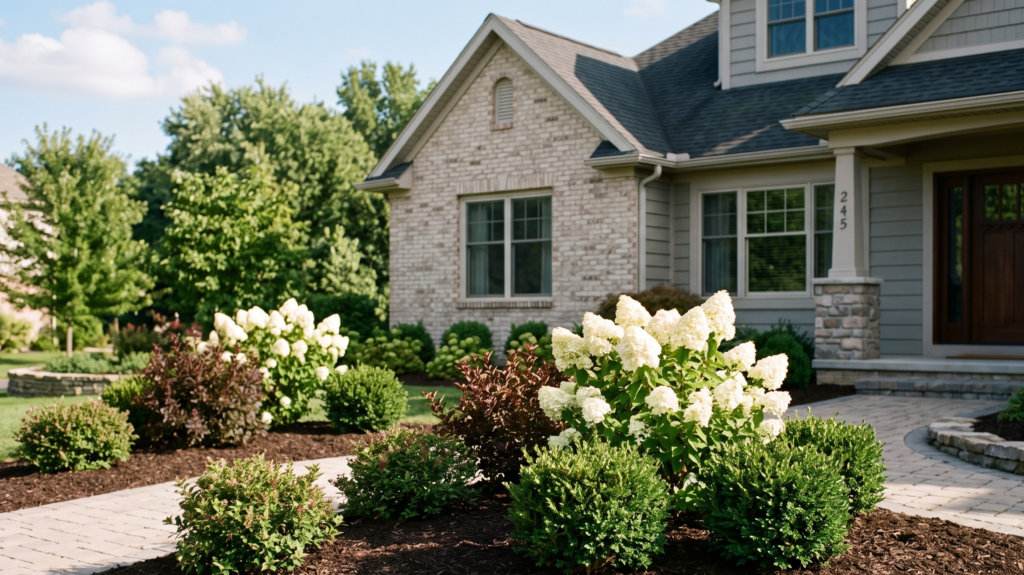
1. Panicle Hydrangea (Hydrangea paniculata – ‘Limelight’ or ‘Incrediball’)
- Sun Exposure: Full Sun to Part Sun
- Hardiness: Zones 3–8
- Why Local Homeowners Love It: Unlike fragile bigleaf (macrophylla) hydrangeas whose flower buds often freeze during cold winters, panicle hydrangeas bloom on new wood. That means even after a harsh WNY winter, you get reliable blooms every single summer.
- Maintenance: Cut back by one-third in late winter or early spring.
2. Boxwood (Buxus – ‘Green Mountain’ or ‘NewGen Freedom’)
- Sun Exposure: Full Sun to Partial Shade
- Hardiness: Zones 5–8
- Why Local Homeowners Love It: Boxwoods provide clean, year-round evergreen structure along foundation plantings, walkways, and entryways. Newer varieties like NewGen Freedom offer strong resistance to boxwood blight and leafminer.
- Maintenance: Minimal shear trimming once a year in late spring keeps them tidy.
3. Ninebark (Physocarpus opulifolius – ‘Summer Wine’ or ‘Diabolo’)
- Sun Exposure: Full Sun
- Hardiness: Zones 2–7
- Why Local Homeowners Love It: Native to eastern North America, Ninebark is extremely tough, highly drought-tolerant once established, and handles heavy WNY clay soils without complaint. Its rich burgundy foliage adds dramatic color contrast without needing high-maintenance annual flowers.
- Maintenance: Light structural pruning every couple of years.
4. Red-Twig Dogwood (Cornus sericea)
- Sun Exposure: Full Sun to Partial Shade
- Hardiness: Zones 3–8
- Why Local Homeowners Love It: When winter arrives in Western New York and snow blankets your lawn, the bright crimson stems of red-twig dogwood deliver striking 4-season visual interest. Native, moisture-tolerant, and virtually indestructible in heavy soil.
- Maintenance: Cut back 1/3 of the oldest, thickest stems to the ground in early spring to encourage new, vibrantly colored red shoots.
5. Dwarf Korean Lilac (Syringa meyeri ‘Palibin’) or ‘Miss Kim’ Lilac
- Sun Exposure: Full Sun
- Hardiness: Zones 3–7
- Why Local Homeowners Love It: Traditional lilacs grow into leggy, overgrown plants that require constant pruning. Dwarf varieties remain compact (4–5 ft tall), resist powdery mildew, and fill your yard with sweet fragrance every May.
- Maintenance: Prune lightly right after spring blooming finishes.
6. P.J.M. Rhododendron (Rhododendron ‘P.J.M.’)
- Sun Exposure: Full Sun to Partial Shade
- Hardiness: Zones 4–8
- Why Local Homeowners Love It: Engineered specifically for cold northern climates, P.J.M. is an evergreen shrub with lavender-purple blooms in early spring. Its leaves turn a dark mahogany-purple during WNY winters, adding rich seasonal color.
- Maintenance: Ensure acid-rich, well-draining soil at planting; requires virtually zero routine trimming.
Frequently Asked Question
Q: When is the best time of year to plant these shrubs in WNY?
A: Early spring (April–May) or early fall (September–October) are the best planting windows. Planting in fall allows roots to establish in cool soil before freezing temperatures hit.
Q: Why don’t my hydrangeas bloom every year in Buffalo?
A: You likely have Hydrangea macrophylla (Bigleaf or Endless Summer type), which sets flower buds on “old wood” in fall. WNY winter freezes often kill these exposed stems. Switching to Panicle Hydrangeas (Hydrangea paniculata) solves this issue completely because they bloom on new spring growth.
Complete Landscape Planning
When designing a low-maintenance landscape, plant selection is only one piece of the process. An integrated design connects multiple components:
+———————————–+
| Low-Maintenance WNY Landscape |
+———————————–+
|
+—————————+—————————+
| |
+—————+ +—————+
| Plant Selection | | Hardscaping |
| (Zone 6a) | | & Structure |
+—————+ +—————+
| |
+—————————+—————————+
|
+————————-+
| Mulch, Soil, Irrigation |
+————————-+
- Soil Amendment & Drainage: Heavy clay must be broken up with organic compost or raised planting beds to prevent root rot during spring thawing.
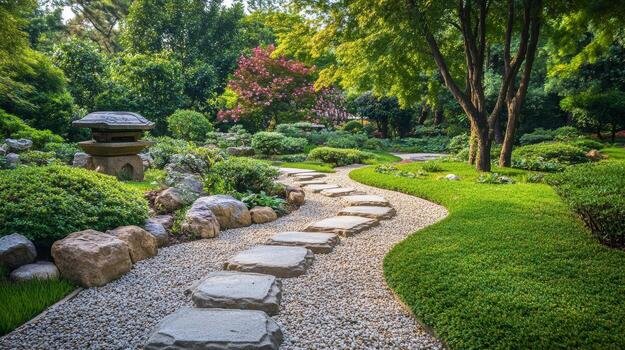
- Hardscape Integration: Combine low-maintenance shrubs with paver walkways, decorative river rock, and natural stone boulders to reduce turfgrass footprint and mowing time.
- Mulch Application: Applying a 3-inch layer of double-shredded hardwood mulch retains soil moisture, suppresses weeds, and insulates shrub root systems against winter frost-heaving.
Frequently Asked Question
Q: How deep should mulch be around low-maintenance shrubs?
A: Maintain a 2 to 3-inch layer of shredded bark mulch. Never pile mulch against the trunk or stems (“volcano mulching”), as this traps moisture and causes stem rot.
Q: Can decorative stone replace bark mulch for lower maintenance?
A: River rock or gravel is great for drainage areas or around hardscapes, but bark mulch is better in plant beds because it cools soil temperatures in summer and decomposes into organic material that helps break up WNY clay over time.
Solutions for Common Backyard Challenges
When planning garden beds, focus on solving everyday site challenges:
- “I want to avoid pruning shrubs multiple times a summer.”
Solution: Choose dwarf or compact cultivars (‘Little Lime’ Hydrangea, ‘Bobo’ Hydrangea, or Gem Box® Ilex) that naturally top out at 3–4 feet.
- “Deer eat everything in my front yard.”
Solution: Focus on deer-resistant varieties like boxwood, spirea, ninebark, and false cypress (Chamaecyparis).
- “My plants look bare all winter.”
Solution: Balance deciduous flowering shrubs with structural evergreens and winter-stem shrubs (Red-Twig Dogwood, Arborvitae, Boxwood).
Frequently Asked Question
Q: Are any shrubs completely 100% deer-proof?
A: No shrub is entirely deer-proof if animals are starving in deep winter. However, boxwoods, ninebarks, and false cypresses contain natural scents or bitter compounds that deer almost always avoid.
Q: What ratio of evergreens to deciduous flowering shrubs should I use?
A: A good rule of thumb for Western NY front yards is 40% evergreens (for structure during cold winters) and 60% deciduous/flowering shrubs (for dynamic summer color and spring growth).
Professional Field Tips
Over 15 years of installing and maintaining residential landscapes in Amherst, Clarence, and Orchard Park, we’ve seen hundreds of homeowners spend money on trending plants that simply can’t survive a Western New York winter or our heavy clay subsoil.
The key to a low-maintenance bed isn’t searching for ‘zero maintenance’ plants—those don’t exist. It’s matching the right plant to the right place, planting at the correct depth (keeping the root flare exposed), and establishing a proper 3-inch mulch boundary to prevent weed encroachment.
Installation Checklist:
- Soil Prep: Dig planting holes twice as wide as the root ball, incorporating compost into native clay.
- Planting Height: Keep the top of the root crown 1 inch higher than grade to allow for settling and proper drainage.
- Initial Watering: Soak deeply 2–3 times per week during the first full growing season until roots establish.
Frequently Asked Question
Q: How much water do newly planted shrubs need in WNY?
A: During their first season, new shrubs need about 1 inch of water per week (roughly 2–3 deep soakings weekly). Once established after 1–2 years, most native or clay-tolerant shrubs rely mostly on natural WNY rain.
Q: Do I need to protect my shrubs with burlap in winter?
A: If you select Zone 6a hardy varieties suited for our region, burlap wrapping is rarely needed except for young evergreens planted in direct path of heavy road-salt spray or severe lake-effect wind corridors.
Regional Micro-Zone Reference Guide
Whether your property is near the University at Buffalo North Campus, along Transit Road in East Amherst, or in established neighborhoods near Snyder and Eggertsville, local soil types and shade patterns vary.
| Location | Common Soil Profile | Recommended Low-Maintenance Shrubs |
| Amherst / Williamsville | Heavy clay, moderate moisture | Panicle Hydrangea, Ninebark, Red-Twig Dogwood, Boxwood |
| Clarence / Akron | Shallow topsoil over limestone bed | Spirea, Juniper, Dwarf Lilac, Potentilla |
| Orchard Park / Hamburg | Heavy snow load zone, acidic clay | P.J.M. Rhododendron, Winterberry Holly, Inkberry |
| Grand Island / Tonawanda | High water table, river winds | Buttonbush, Red-Twig Dogwood, Ninebark |
Frequently Asked Question
Q: Why do plant recommendations differ between Clarence and Orchard Park?
A: Clarence often deals with shallow soils over limestone bedrocks (higher pH), whereas Orchard Park and Hamburg sit in heavy southtown snow belts with more acidic clay soils. Selecting plants adapted to these local soil chemistry traits leads to much lower maintenance.
Looking for Professional Landscaping Services Near You?
If you’ve been searching for a top-rated landscaper near me in Erie County, working with a team that understands local WNY soil chemistry, microclimates, and hardiness zones makes all the difference.
Our team at Amherst Landscaping regularly provides shrub installation, bed redesign, and grounds maintenance across the following nearby communities:
- East Amherst & Williamsville (14051, 14221)
- Clarence & Clarence Center (14031, 14032)
- Snyder, Eggertsville & Getzville (14226, 14068)
- Wheatfield, Pendleton & North Tonawanda (14120, 14094)
Whether you need a full front-yard transformation or expert planting services nearby, we tailor every design to thrive in local Western New York conditions.
Frequently Asked Question
Q: Do you offer landscape consultations near me in East Amherst and Williamsville?
A: Yes! We provide on-site landscaping consultations across all zip codes in Amherst, Williamsville, Clarence, and surrounding Erie/Niagara County communities.
Transform Your Front Yard with Amherst Landscaping
Ready to replace high-maintenance bushes with a clean, vibrant landscape that thrives year after year in Western New York?
At Amherst Landscaping, our design and installation teams specialize in creating custom, low-maintenance planting beds tailored to your home’s unique sunlight, soil, and drainage conditions. Contact us today to discuss your vision!
📍 Find Us On The Map
Frequently Asked Question
Q: How do I get started with a professional landscape redesign?
A: Reach out to Amherst Landscaping via phone or our website contact form. We will schedule an initial site evaluation to assess your property’s light levels, soil condition, and drainage before recommending a custom plant design.
More from the blog
Snow Removal Equipment & Tools: Complete Buyer’s Guide
If you've ever watched a plow truck fly past your commercial lot at 5 AM and wondered what it actually takes to…
Read Article
Lawn Mowing Services in Buffalo NY for a Healthy, Beautiful Lawn
A healthy, well-maintained lawn can transform the appearance of your property, improve curb appeal, and create a more enjoyable outdoor space. For…
Read Article
Snow Removal in Buffalo, NY: Your Complete Local Guide
If you've lived here more than one winter, you already know: Buffalo doesn't do "light dusting." We do lake-effect walls of snow…
Read Article